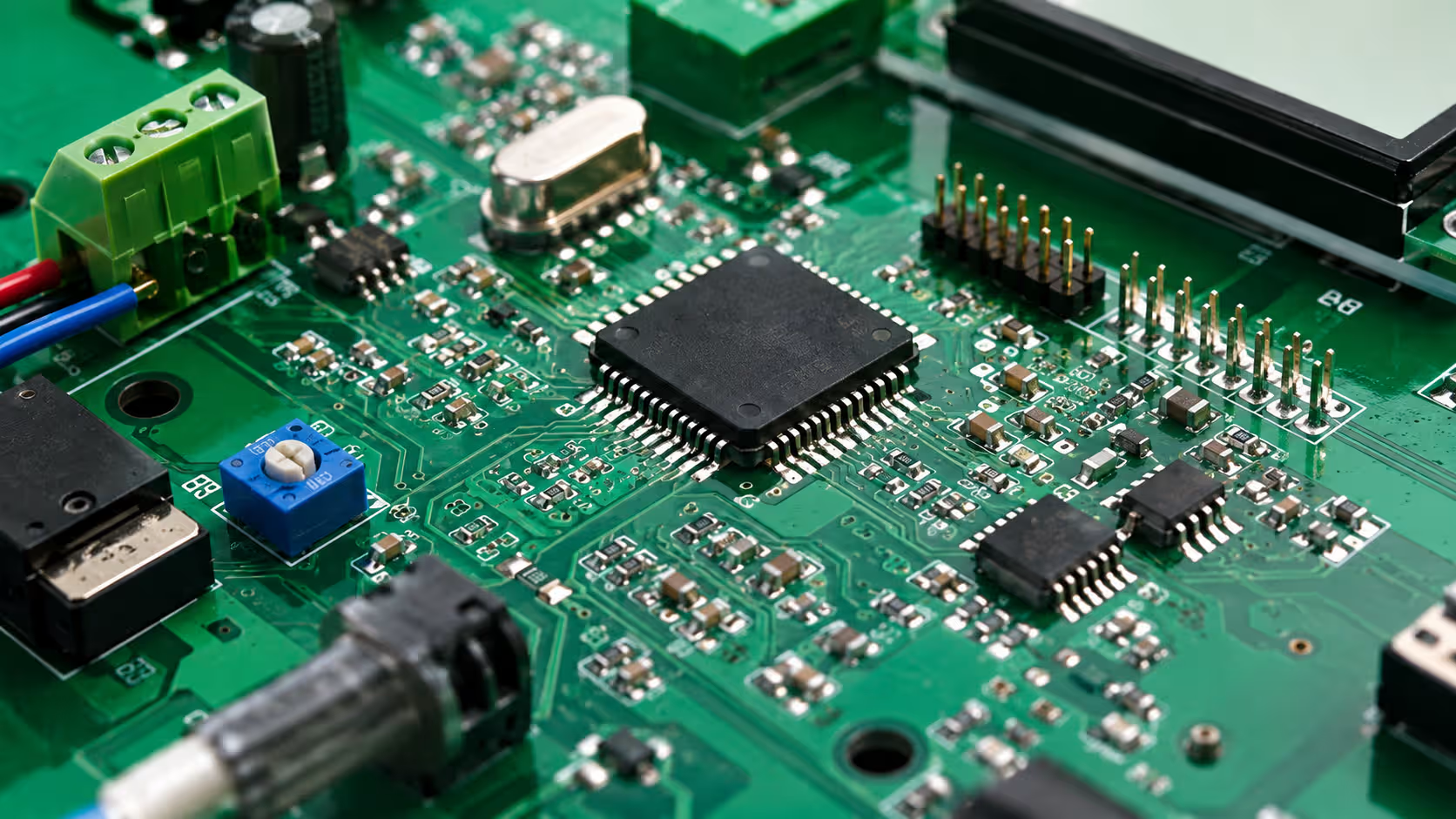
Real world signals are not often digital. Temperature, pressure, sound, vibration, speed, light and voltage are all continually changing, and are thus of an analog nature. But these continuous signals can not be immediately understood by digital systems like PLCs, microcontrollers, processors and computers. They require numbers, binary values, digital data to process information.
Here is where an analog to digital converter comes in. It provides a bridge between the real-world analog signals and the current digital electronics. From my experience working with sensors and microcontroller-based circuits, ADC is one of the first notions that makes electronics feel realistic. When I realized how a sensor voltage is converted into usable data, applications like temperature monitoring, light control and automation became so much easier to create and debug.
READ MORE: Electric Discharge Machining Diagram, Principle, Working & Applications
What is an Analog to Digital Converter (ADC)?
An analog to digital converter, or ADC, is an electrical circuit or integrated chip that transforms a continuous analog stream into a digital value. An analog signal can take several different values in a range. A digital signal is represented using binary integers, often 0s and 1s.
For example, a temperature sensor may output a variable voltage based on heat. A microcontroller cannot read that voltage as a temperature directly. The ADC turns that voltage into a number that the controller can display, save, compare or process.
Simply said, an ADC is the bridge between the analog and digital converter world. Common ADC input inputs are temperature, sound, pressure, light intensity, vibration and voltage signals.
Why ADC is Important in Modern Electronics
ADC is crucial since most current gadgets employ sensors. Sensors monitor real world situations and processors need digital data. Without ADC a microcontroller would be unable to read a temperature sensor, a smartphone would be unable to interpret voice input, and a PLC would be unable to monitor an industrial pressure sensor.
ADC is widely utilized in embedded systems, IoT devices, smart phones, automotive electronics, medical equipment, digital meters, communication systems and industrial automation. The ADC is used in many control systems to transform the information from the sensors to digital data that can be used to make decisions.
ADC Block Diagram and Main Components
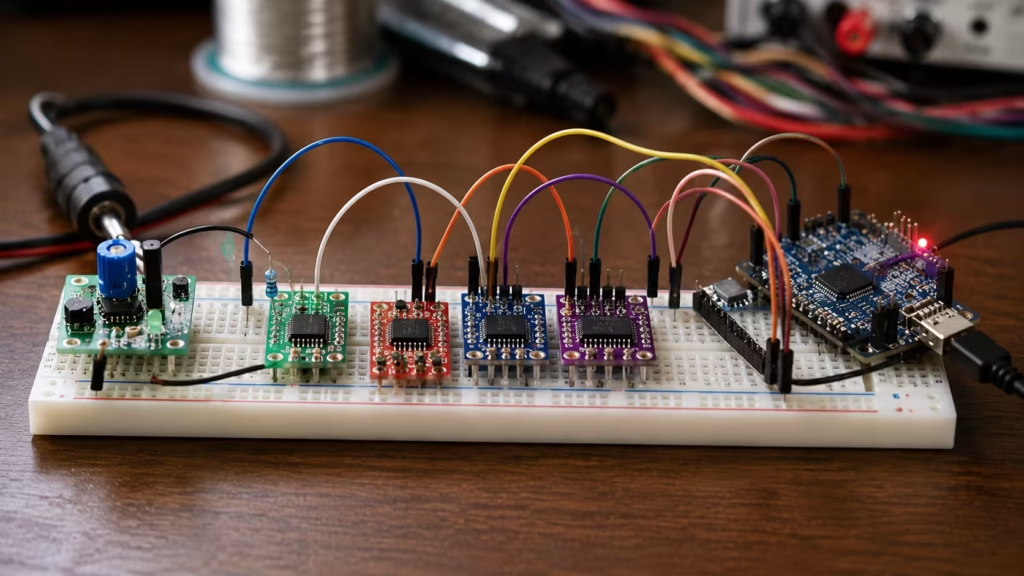
An ADC block diagram usually includes four main stages: sample, hold, quantization, and encoder.
Sample
In the sampling stage, the analog input signal is measured at fixed time intervals. The number of samples taken per second is called the sampling frequency. A higher sampling rate helps capture fast-changing signals more accurately.
Hold
After sampling, the hold circuit temporarily stores the sampled value. This is important because the ADC needs a stable value during conversion. If the signal keeps changing during conversion, the final digital output may become inaccurate.
Quantization
Quantization converts the continuous analog value into fixed digital levels. For example, an 8-bit ADC has 256 possible levels. A higher bit resolution gives smaller steps and better accuracy.
Encoder
The encoder converts the quantized value into binary output. This binary data is then sent to a microcontroller, processor, or digital system for further processing.
How Analog to Digital Conversion Works
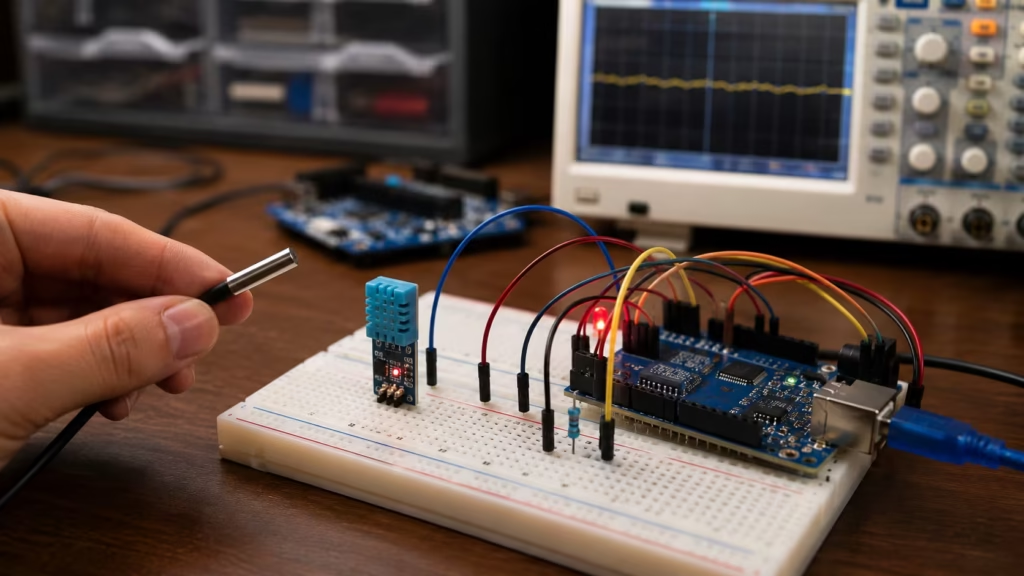
The functioning idea of the ADC is straightforward when described step by step. The sensor creates an analog signal first. Then the ADC samples the signal at a constant rate. The sampled value is kept temporarily. Quantization turns the sampled value into a discrete level. The encoder translates the discrete level into binary data. Finally, the digital processor gets the data and processes it.
For example, a voltage in a temperature monitoring system is generated by a temperature sensor based on heat. The analog to digital converter turns that voltage into a number. The microcontroller then uses that number to display temperature on a display or turn on a cooling fan.
Another example is a light sensor for automation. Change in light intensity causes variation in sensor output voltage. ADC turns this voltage into digital data so that the system may automatically turn on and off lights. I feel ADC is far simpler to comprehend when applied to these practical tasks than just going through the theory. Seeing a sensor value change on a microcontroller screen makes the complete analog to digital conversion process much apparent.
Important ADC Characteristics
Resolution
Resolution defines how many digital levels an ADC can produce. Common ADC resolutions include 8-bit, 10-bit, 12-bit, and 16-bit. A 10-bit ADC gives 1024 levels, while a 12-bit ADC gives 4096 levels.
Sampling Rate
Sampling rate tells how fast an ADC captures input values. Fast-changing signals like audio or vibration need a higher sampling rate.
Accuracy
Accuracy shows how close the digital output is to the actual analog input. Better accuracy is important in medical, industrial, and measurement devices.
Signal-to-Noise Ratio
Signal-to-noise ratio, or SNR, shows how clean the converted signal is. A higher SNR means less noise and better signal quality.
Bandwidth
Bandwidth describes the range of signal frequencies an ADC can handle properly. Higher bandwidth is needed for high-speed communication and signal processing.
Types of Analog to Digital Converter
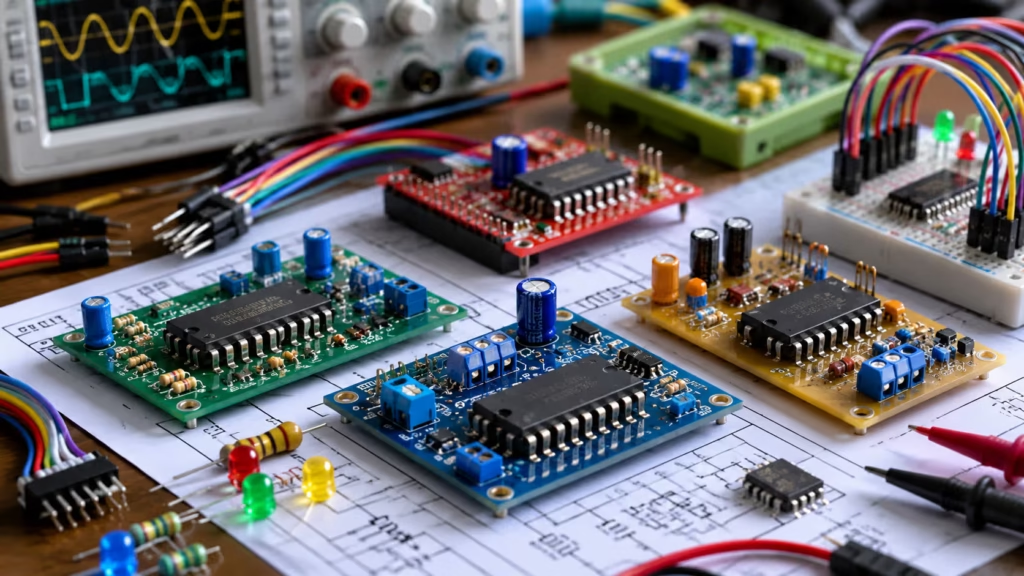
Flash ADC
The quickest ADC is the flash ADC. It employs several comparators to translate the input signal practically instantaneously. Its key benefit is speed. It is utilized in high speed oscilloscopes, radar and communication systems.
Successive Approximation ADC
A sequential approximation ADC (or SAR ADC) is an ADC that uses internal digital circuitry to compare the input signal step-by-step. It is a fantastic all round combination of speed, power and accuracy. This is one of the common types of ADCs used in microcontrollers.
Dual Slope ADC
A dual slope ADC measures the input signal by integrating it. It is slower but very solid and precise. It is often used in digital multimeters and precision devices.
Sigma Delta ADC
Very high resolution is obtained using a sigma delta ADC. It is slower than flash or SAR ADCs but offers good precision. It is frequently utilized in audio equipment, weighing scales and precise measuring equipment.
Pipelined ADC
Pipelined ADC Pipeline ADC breaks the conversion into phases. It strikes a compromise between speed and resolution, making it beneficial for imaging systems, communication devices and data collecting equipment.
Popular ADC Examples
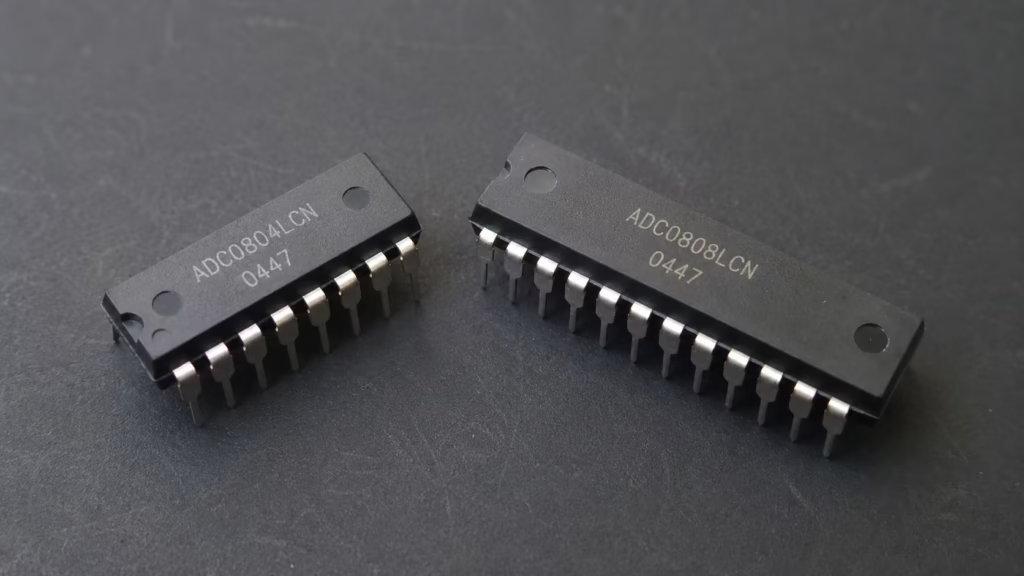
ADC0804
ADC0804 is a popular 8-bit analog to digital converter with a single analog input. It is often used in novice microcontroller projects, sensor interfaces, and basic data collecting circuits. It can convert the analog voltage to 8 bit digital output.
ADC0808
ADC0808 is likewise 8 bit ADC but allows multiple analog input channels. This makes it handy if you have numerous sensors that need to connect to one microcontroller. It is widely utilized in sensor interfacing, automation systems and simple data collecting systems.
Real-World Applications of ADC
Nearly every digital device that interfaces with the physical environment has ADC applications. Smartphones employ ADCs for things like microphone input, touch sensing, camera operations and battery management. In digital cameras, ADC is used to transform the light signals from image sensors into digital picture data.
ADC is used in medical devices to convert body signals and scan data to digital form. It is utilized for engine control, oxygen sensors, temperature sensors, pressure sensors and battery management in automobile sensors. In industrial automation and PLC systems, ADC is used to monitor pressure, flow, speed, level and temperature.
In robotics, ADC helps robots read sensor feedback. It transforms information from air quality, humidity, light and gas sensors in environmental monitoring. Also in communication systems and data recording the ad converter technology is crucial. In networking, the word adc application delivery is occasionally used differently, although in electronics content, it might be viewed as how ADC converts analog sensor information into digital applications.
Advantages of ADC
- Enables sensor-to-processor communication
- Improves measurement accuracy
- Supports automation systems
- Provides fast data acquisition
- Makes modern digital devices possible
Conclusion
One of the most important electrical devices is an analog to digital converter which transforms the real world analog impulses into digital data. How does it operate ? Sampling and holding, quantizing and encoding. The several types of ADCs such as flash ADC, SAR ADC, dual slope ADC, sigma delta ADC and pipelined ADC are selected depending on the speed, accuracy, resolution and application demands.
ADC finds its applications in smartphones, automotive systems, medical devices, industrial automation, IoT devices, robotics and communication systems. From my point of view studying ADC is highly beneficial for students, technicians and engineers since it combines theory with practical hardware. Knowing ADC makes designing, testing and improving electronics using sensors, microcontroller projects and automation systems much easier.