I think one of the most neglected aspects of the performance of industrial components is what happens after they are machined or forged. Often, whether a component will perform reliably over the long term or fail prematurely is determined by a well managed heat treatment procedure. The heat treatment process is widely employed in modern industrial manufacturing to enhance the qualities of materials, optimize their mechanical properties, and prolong the service life of important components.
To enhance the quality of forged carbon steel components, improve manufacturing quality and ensure consistent results across production batches, manufacturers depend on the heat treating process. Whether manufacturing automotive components, industrial gear or heavy engineering equipment, thermal processing is vital to achieve durability, wear resistance and structural integrity.
READ MORE: Top Automotive Crankshaft Companies: Market Size, Leaders, and Trends
What Is a Heat Treatment Process?
A heat treatment process is a carefully controlled thermal procedure used to alter the physical and mechanical properties of metals through precise heating and cooling cycles. This process unlike machining, casting or shaping procedures, alters the internal microstructure of a material without appreciably affecting its shape, size or dimensions.
It is mostly used to increase the performance of metal parts for certain industrial applications. Manufacturers may manipulate temperature, holding time and cooling rates to optimize hardness, toughness, tensile strength, ductility and grain structure, ensuring components have the ideal blend of durability, dependability and mechanical performance.
This manufacturing procedure is necessary for the improvement of mechanical characteristics of steel, improvement of grain structure, enhancement of wear resistance and reduction of inner stresses. It also extends component life and helps manufacturers attain better quality standards with more consistent and dependable performance.
Why the Heat Treatment Process Is Important
In industrial manufacturing, raw metals often do not possess the ideal combination of strength, hardness, toughness, and durability required for demanding applications. A properly controlled heat treatment process helps manufacturers optimize these characteristics by carefully regulating heating and cooling cycles to achieve the desired material performance.
If done correctly it increases wear resistance, tensile strength, fatigue resistance and improves overall mechanical dependability. Components like gears, shafts, bearings, forged components and structural assemblies that are continuously stressed and exposed to cyclic loading require higher toughness and ductility in order to better behave and survive difficult operating conditions throughout a longer service life.
Among various major performance advantages are: improved hardness, improved tensile strength, improved toughness, improved wear resistance, improved ductility, and improved fatigue resistance. These advancements assist components to work more dependably under severe industrial and technical circumstances.
Common Heat Treatment Process Methods
Annealing
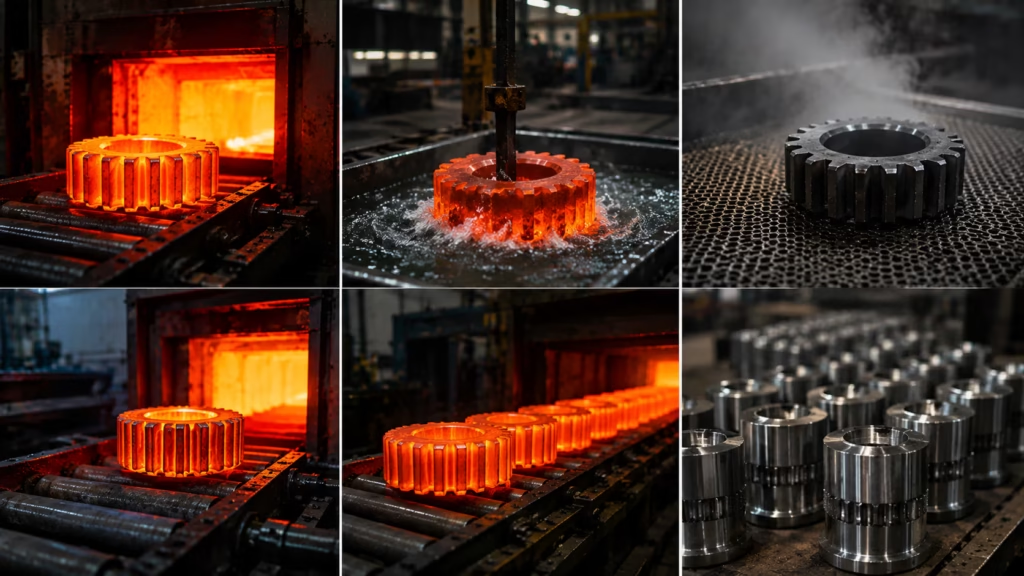
Annealing is one of the most prevalent thermal procedures in the production. The material is heated to a specified temperature and then slowly cooled in a kiln. This controlled cooling cycle makes the metal softer and more malleable, as well as preparing it for subsequent machining or shaping procedures. As a result annealing works to enhance ductility, lower hardness, improve machinability, and help relieve residual stresses that may have formed during previous manufacturing processes.
Normalizing
Normalizing is a heat treatment process used to refine grain structure and improve the overall consistency of steel components. In this procedure, the material is heated over its critical temperature and cooled in air. This results in a more homogeneous microstructure which results in better toughness, higher strength, finer grain structure and increased mechanical performance.
Hardening
Hardening is a treatment to improve the strength and hardness of steel parts. The material is heated to the necessary temperature and then cooled rapidly. This treatment greatly enhances the resistance to wear and deformation, making the component more suited for demanding industrial applications. Hardening improves load-bearing capacity and mechanical performance.
Quenching
Quenching is the fast cooling of hot steel in a suitable quenching media. The pace of cooling is very important in influencing the ultimate hardness, strength, and microstructure of the material. Depending on the steel quality and required qualities, producers may employ water, oil, air or polymer solutions as the cooling media. Proper quenching allows the attainment of greater levels of hardness while keeping the necessary performance qualities.
Tempering
Tempering is done after hardening to minimize brittleness and enhance toughness. In this procedure, the steel is reheated to a predetermined temperature and then slowly chilled. This procedure generates a more balanced mix of strength and toughness allowing components to better resist impact and repetitive loading. Tempering also relieves internal tensions and increases toughness, impact resistance and leads to a longer service life.
Heat Treatment Process for Carbon Steel
Carbon steel is still one of the most extensively used engineering materials due to its great strength-to-cost ratio, adaptability and applicability for a variety of industrial applications. However, many grades of carbon steel require a carefully controlled heat treatment process to achieve the hardness, wear resistance, tensile strength, and durability needed for demanding operating conditions.
This heat treatment phase is especially necessary for components that are subject to high loads, persistent friction or repetitive stress cycles. By optimizing the internal grain structure and mechanical properties of the material, producers may greatly enhance the performance, dependability and service life of steel components while retaining dimensional correctness and structural stability.
The benefits of carbon steel heat treatment include:
- Improved hardness
- Higher strength
- Better wear resistance
- Increased durability
- Enhanced fatigue performance
Role of Heat Treatment in Extrusion Forging Process Carbon Steel Heat Treatment
Extrusion forging technology is commonly utilized for manufacturing of forged items with good structural integrity and near net form geometry. However, forging alone does not produce the final material properties necessary for demanding industrial applications. This is why the heat treatment process is commonly performed after forging operations.
The link between the extrusion-forging process, heat treatment of carbon steel and the performance of the final component is quite crucial. The heat treatment improves the grain structure formed during the forging and helps to eliminate the internal tensions produced during the deformation.
In my experience, many engineers consider forging and heat treating a single production approach, as the two processes work together to enhance performance of the part.
Heat treatment of carbon steel enhances its hardness, strength, wear resistance, durability, and fatigue performance, allowing components to function consistently under difficult industrial conditions.
Benefits of Heat Treatment Process in Industrial Manufacturing
A properly controlled heat treatment process delivers significant performance improvements across a wide range of industrial sectors. Manufacturers use industrial heat treatment to improve product quality, reduce component failures, and provide consistent material qualities that satisfy strict technical standards.
Thermal processing also adds to operating efficiency by increasing the strength, durability and dependability of metal parts. As a rule, the higher the mechanical performance of components, the less maintenance, the fewer failures and the longer the service life, helping manufacturers cut downtime and total costs of operation.
This procedure increases product quality, durability and machining performance and decreases component failures and more consistent and dependable material qualities.
Factors Affecting Heat Treatment Process Results
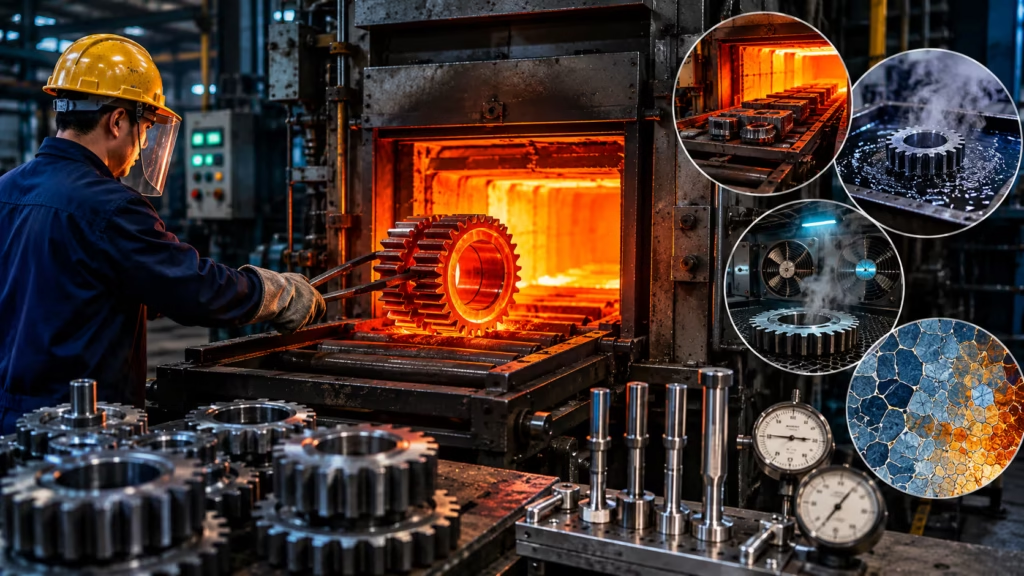
The success of a heat treatment process depends on precise control of multiple variables. Even small variations can significantly affect the final material properties.
Critical process factors include:
- Heating temperature
- Holding time
- Cooling rate
- Material composition
- Furnace atmosphere
- Process control accuracy
Improper control of these variables can result in reduced hardness, poor toughness, distortion, cracking, or inconsistent performance.
Applications of Heat Treatment Process
The heat treatment process is widely used throughout industrial engineering and manufacturing sectors because it improves performance and extends component life.
Major applications include:
- Automotive Industry – gears, shafts, crankshafts, axles
- Manufacturing Industry – production equipment and precision parts
- Forging Industry – forged carbon steel components and forged parts
- Tool Production – cutting tools, dies, molds, and industrial tooling
- Industrial Machinery – bearings, rollers, and transmission systems
- Engineering Components – structural and high-performance assemblies
Conclusion
The heat treatment process remains one of the most important operations in modern manufacturing because it directly influences material properties, durability, and long-term performance. Steel can be further processed by annealing, normalizing, hardening, quenching and tempering to provide desired mechanical qualities for industrial applications .
Carbon steel heat treatment is critical in manufacturing dependable engineering components. Extrusion forging method carbon steel heat treatment offers further benefits by refining grain structure, lowering stress, and enhancing wear resistance.
In my view, the real benefit of thermal processing is to convert ordinary metal into a substance that will fulfill the severe standards of engineering. For manufacturers concerned with product quality, durability, and constant mechanical performance, this regulated operation is much more than a normal production stage; it is a strategic investment that boosts dependability, extends component life, and promotes long-term industrial success.