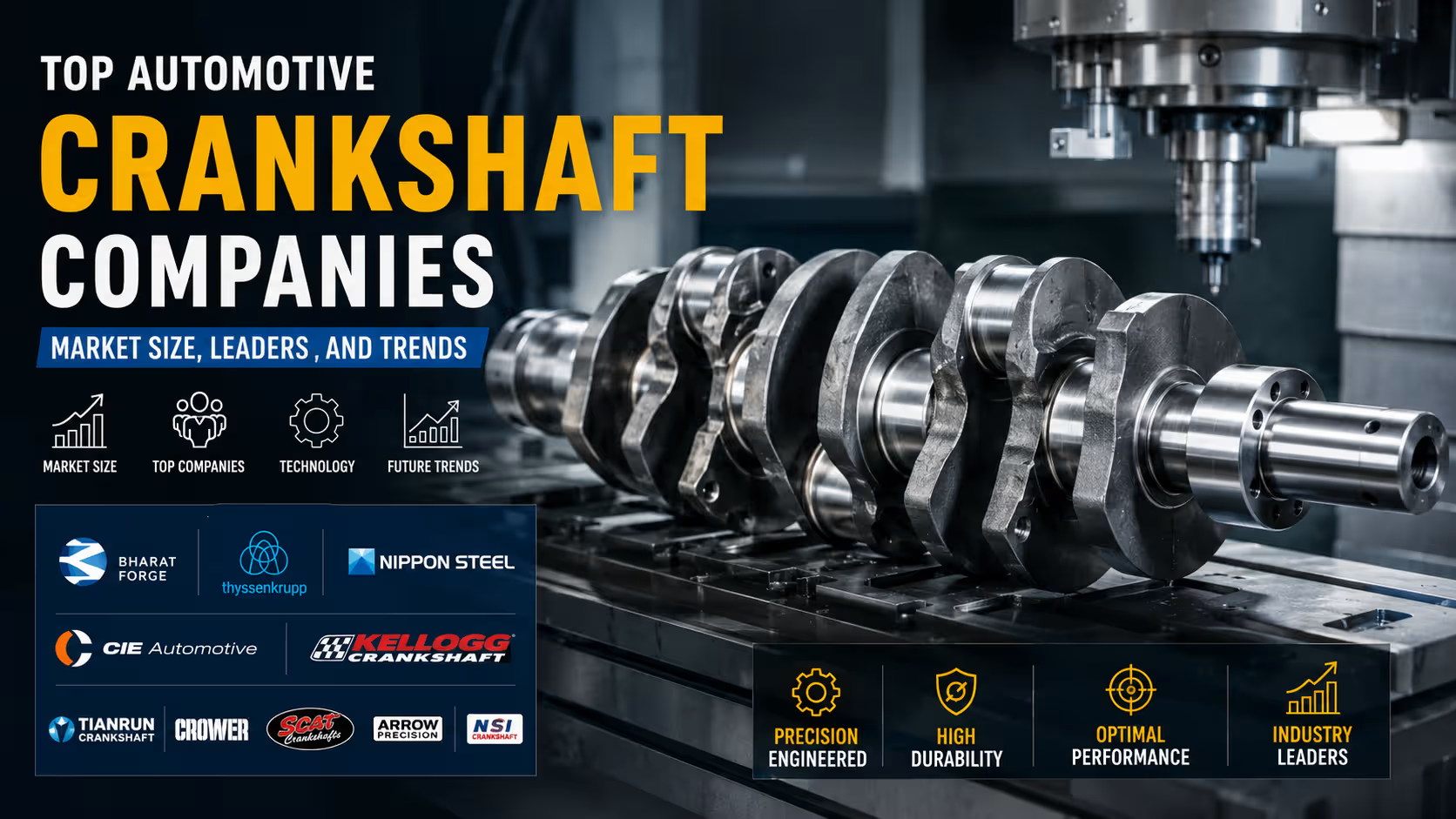
Top Automotive Crankshaft Companies: Market Size, Leaders, and Trends: The global automotive industry depends heavily on precision-engineered engine components, and crankshafts remain one of the most critical parts inside modern internal combustion engines. In my opinion, the crankshaft segment is becoming increasingly important as automakers focus more on engine efficiency, durability, and high-precision manufacturing. As vehicle production continues to expand across passenger cars, commercial vehicles, and performance automobiles, leading crankshaft companies are playing a major role in supporting OEM manufacturing.
Global crankshaft market is quickly shifting from forged steel crankshaft experts to large scale automotive component suppliers through sophisticated metallurgy, CNC machining, industrial automation and next generation manufacturing technologies. The competition among the leading global automotive crankshaft manufacturers is also changing with the increasing need for high-performance engines, hybrid powertrains, and long-lasting components for commercial vehicles.
READ MORE: Guide to Spark-Ignition Engines: Four-Stroke Otto Cycle & Thermodynamic Diagrams
Automotive Crankshaft Market Overview
The global crankshaft market is projected to maintain a steady growth rate driven by increased automobile production and increasing need for durable engine components. Passenger vehicles, heavy-duty trucks, agricultural machinery, motorbikes and industrial engines all require automotive crankshafts, making them a critical part of the wider automotive supply chain.
The Asia-Pacific region currently dominates the global crankshaft market owing to the high vehicle manufacturing volumes in countries such as China, India, Japan and South Korea. North America and Europe remain strong markets for premium vehicle manufacturing, the need for performance engines and innovative powertrain innovation.
Passenger car production is the major contributor to crankshaft demand but commercial vehicles and industrial transportation industries are growing more significant. Forged steel crankshafts for heavy-duty diesel engines have to be extremely durable, able to withstand extensive operational cycles and strong torque loads.
Another key driver to the market growth is the aftermarket automotive parts segment. The global demand for high-performance crankshaft suppliers is increasing with the growth in demand from the engine rebuilding, motorsports applications and performance tuning industries.
The worldwide automotive production is on the rise, and crankshaft producers are putting more resources into precision machining, industrial automation and high-strength materials to stay competitive in the shifting industry.
Why Crankshafts Are Critical in Automotive Engineering
Crankshafts are one of the most critical components of an internal combustion engine, transforming the pistons’ linear motion into the rotating motion that drives the vehicle’s drivetrain. Without a correctly balanced and constructed crankshaft, the engine performance, fuel efficiency and dependability would be tremendously compromised.
Today’s vehicle crankshafts are subjected to significant stress, vibration and temperature loads during engine operation. This is particularly essential in turbocharged engines, powertrains for commercial vehicles and high-performance automobile applications.
The current environment of automobile engineering closely links the durability of a crankshaft to the engine’s durability, smoothness and efficiency. Today the industry is focused on reducing weight in the engine components, reducing vibration and increasing the precision of the manufacturing processes to improve the overall performance of the powertrain.
Top Automotive Crankshaft Companies
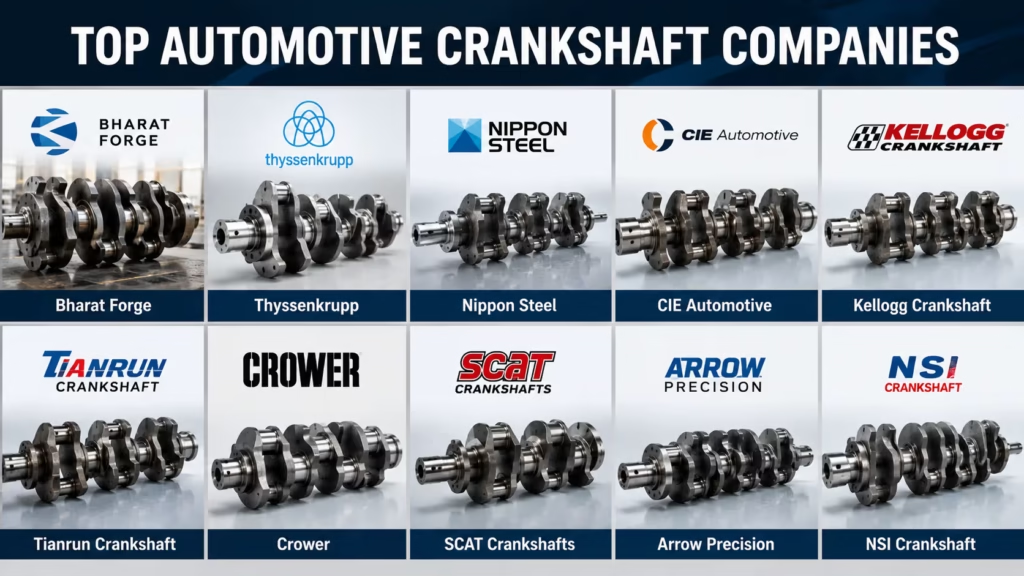
From my perspective on the trend in automobile production, there’s a bigger competitive advantage for companies that are making large investments in automation and forged steel technologies and OEM agreements throughout the world.
Bharat Forge
Among the leading top automotive crankshaft companies. Today Bharat Forge is a leading global provider of forged engine and powertrain components. The company is headquartered in India and caters to a few worldwide OEM manufacturers and commercial vehicle brands.
Bharat Forge manufactures forged steel crankshafts, precision forged components for high duty engine applications. We have manufacturing plants employing advanced CNC machining, robotic automation and metallurgical technology to enable worldwide car production.
The company has a particular strength in commercial vehicle engine parts and industrial automotive supply chains.
Thyssenkrupp
Germany-based Thyssenkrupp is one of the best-known automotive crankshaft producers in Europe. The company is specialized in precise engineering, advanced metallurgy and large-scale automotive manufacturing technology.
Thyssenkrupp offers crankshafts to various premium vehicle companies and has vast experience in lightweight engine component development. The company also concentrates on industrial automation and high precision production techniques.
Thanks to its global manufacturing network, it remains very competitive in the automotive OEM supply chains.
Nippon Steel
Nippon Steel is a large Japanese industrial firm, with a high proficiency in automobile steel production and forged crankshaft manufacturing. The firm is a key supplier of high-strength steel materials utilized in modern engine rotating assembly.
Nippon Steel focuses on materials durability, metallurgy and engine efficiency upgrades. Its crankshaft manufacturing activities serve passenger car and commercial vehicle production around the world.
CIE Automotive
CIE automobile is a Spanish-based multinational automobile components firm focused on precision machining and powertrain engineering solutions. The company produces a diverse range of forged and cast crankshafts for automobile OEM suppliers.
CIE Automotive has grown fast through acquisitions and global manufacturing alliances, building a significant presence in Europe, Asia and North America.
It continues to strengthen its market position through its focus on industrial machining technologies and automotive production efficiency.
Kellogg Crankshaft
Kellogg Crankshaft is a premier manufacturer of high performance crankshafts for automotive, racing and heavy duty engine applications. The firm is known for precision machining and durable forged steel crankshaft designs.
Kellogg products are widely utilized in the motorsports, commercial engines, and automotive aftermarket parts industries.
Tianrun Crankshaft
China-based Tianrun Crankshaft’s large-scale production and low manufacturing costs have made it a prominent participant in the worldwide crankshaft business.
The company provides crankshafts for commercial vehicles, passenger cars and industrial engines. Tianrun also continues to invest in CNC automation, engine balancing technologies and modern manufacturing processes.
Crower
Crower is a household name in the performance engine components market. The company is specialized in racing crankshafts, custom forged parts and high performance engine technologies.
Its products are frequently employed in motorsports, drag racing and performance car applications where engine durability and rotational balance are crucial.
SCAT Crankshafts
SCAT Crankshafts is also a leading vendor in the high performance crankshaft category. The company produces forged and cast crankshafts for aftermarket automobile parts and racing engines.
SCAT’s major focus is price, strength, and the quality of precision machining.
Arrow Precision
Arrow Precision is a UK-based manufacturer of high-end forged crankshafts for motorsports and high-performance cars. The company is noted for precision forged fabrication and lightweight engine parts.
Arrow Precision products can be found in Formula racing, motorbike engines and advanced automotive engineering programs.
NSI Crankshaft
NSI Crankshaft is a sole-source provider to OEM automotive suppliers and industrial engine manufacturers. The company concentrates on durable heavy-duty crankshaft solutions and innovative machining technology.
Its goods are for the agricultural vehicles, commercial trucks and industrial transportation industries.
Forged vs Cast Crankshaft Technologies
Forged Crankshafts
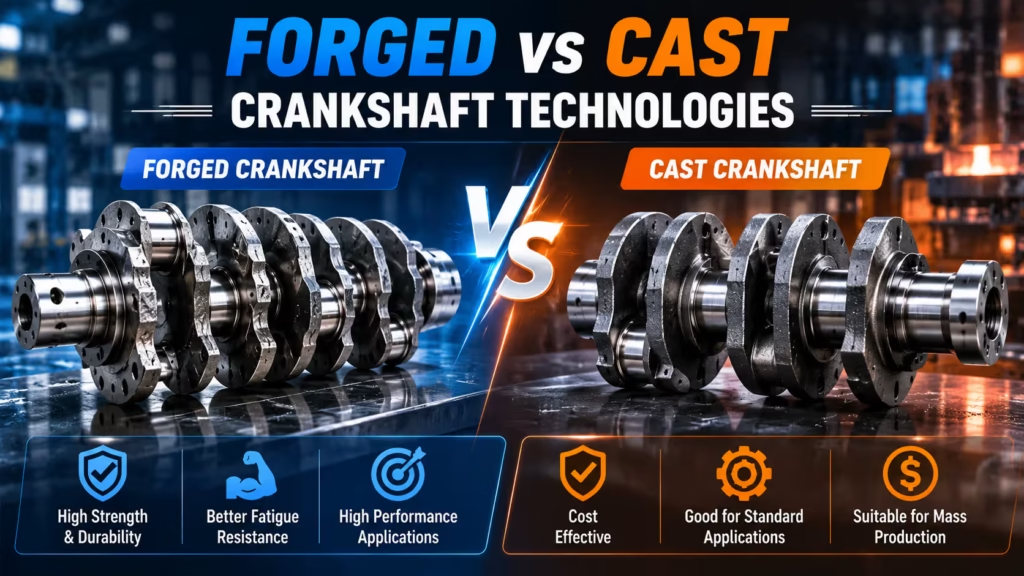
Forged crankshafts are made using high-pressure forging techniques in which heated steel is pushed into shape. This procedure increases the grain structure of the material, its strength and its fatigue resistance.
High performance engines, commercial vehicles, motorsports and turbocharged applications require forged steel crankshafts as they are capable of tolerating larger stress loads and faster engine speeds.
Forged crankshafts cost more to make, but they are more durable and provide greater engine reliability.
I expect to see more forged crankshafts in high-performance and heavy-duty applications since they are more durable and better resist stress.
Cast Crankshafts
Cast crankshafts are made by pouring molten metal into molds before machining and finishing procedures. These crankshafts are cheaper and are utilized in most common passenger cars.
The makers of cast crankshafts are aiming for inexpensive, mass production and lightweight manufacturing. They are not as strong as forged crankshafts, but they are nevertheless rather effective for daily automobile applications.
The selection of a forged or cast crankshaft is mainly based on the performance needs of the engine, the production costs, and the purpose of the vehicle.
Key Trends in the Automotive Crankshaft Industry
Several key themes are affecting the future of the worldwide crankshaft industry.
As businesses demand tighter tolerances and improved production efficiency, precision machining and CNC automation become increasingly vital. With today’s sophisticated industrial automation, crankshaft companies may now get more consistency and lower operating costs.
Automakers are still looking at fuel economy and emission reduction goals and light-weight engine components are gaining favor. Manufacturers are increasingly turning to sophisticated metallurgy and high-strength steel components to make a crankshaft lighter without jeopardizing its durability.
Hybrid vehicles are driving new prospects . Hybrid powertrains still need internal combustion engine components . This has led automobile component manufacturers to develop next-generation engine technology that is optimized for efficiency and vibration reduction.
Sustainable manufacturing processes are another rising trend. Many automotive engine providers are increasingly focusing on energy efficient machining procedures, recycled materials and lower emission producing manufacturing processes.
Challenges Facing Crankshaft Companies
Although there is a considerable demand in the automobile industry, the manufacturers of crankshafts for automotive applications are facing many main problems.
Rising raw material cost continues to be a major problem as prices of forged steel and specialized alloys fluctuate around the world. Supply chain issues have impacted production schedules and manufacturing efficiency.
Another key challenge is the expanding worldwide competitiveness. Asian, European and North American makers are in fierce competition on price, production capacity and technical innovation.
Tighter pollution laws are also transforming engine technologies and suppliers are being challenged to adapt fast to changing standards of vehicle engineering.
Moreover, the worldwide shift to electric vehicles has created a degree of doubt over long term demand for internal combustion engine components.
Impact of EV Growth on the Crankshaft Market
The rapid growth of electric vehicles is undoubtedly affecting the future outlook for the crankshaft industry. Fully electric powertrains do not require traditional crankshafts, which could gradually reduce long-term ICE component demand.
However, the transition is expected to remain gradual rather than immediate. Hybrid vehicles still rely heavily on internal combustion engines, creating continued opportunities for OEM crankshaft suppliers and automotive manufacturing companies.
Many leading crankshaft companies are already diversifying into EV-related components, lightweight engineering solutions, and advanced manufacturing technologies to remain competitive in changing market conditions.
Heavy-duty commercial vehicles, industrial engines, and hybrid powertrain systems are likely to support crankshaft demand for many years ahead.
Future Outlook for Automotive Crankshaft Companies
The future of the automotive crankshaft market remains closely connected to global vehicle production trends, hybrid engine demand, and industrial innovation.
Although EV adoption is accelerating, internal combustion engines are expected to remain important in commercial transportation, performance vehicles, heavy-duty applications, and hybrid powertrains throughout the coming decade.
Leading automotive crankshaft manufacturers will continue investing in precision machining, industrial automation, advanced metallurgy, and high precision manufacturing technologies to improve competitiveness.
The growing need for engine efficiency, lightweight powertrain engineering, and durable heavy-duty crankshaft solutions will also create new market opportunities for suppliers worldwide.
As automotive production technology evolves, crankshaft companies that adapt through innovation, automation, and diversified manufacturing strategies are likely to remain industry leaders.
Final Thoughts
The global crankshaft market continues to play a vital role in modern automotive manufacturing and powertrain engineering. From forged steel crankshaft specialists to large OEM automotive suppliers, leading crankshaft companies remain essential to vehicle performance, engine durability, and industrial production efficiency.
Companies like Bharat Forge, Thyssenkrupp, Nippon Steel, CIE automobile and Tianrun Crankshaft are creating the future of automobile engine components through precision machining, innovative metallurgy and next-generation production technology.
I believe that the global crankshaft market’s future will be decided by the fastest responders to the needs of hybrid powertrain, lightweight engineering and industrial automation.
While EV expansion creates long-term headwinds, the need for hybrid engines, commercial vehicle powertrains and performance engine parts will continue to support the worldwide crankshaft industry for years to come. Companies that adopt industrial automation, lightweight engineering and changing automotive technologies are projected to drive the next phase of market expansion.