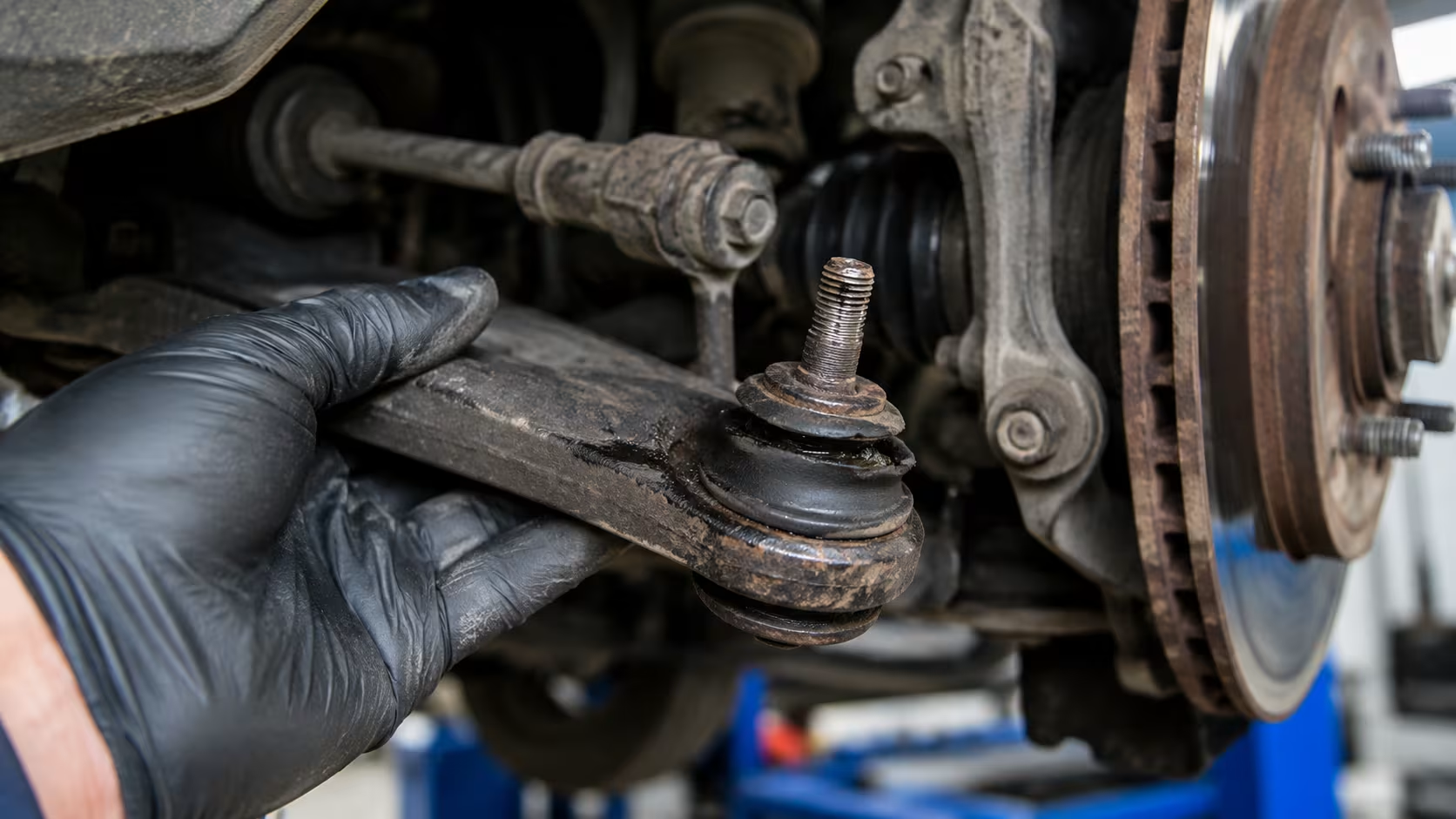
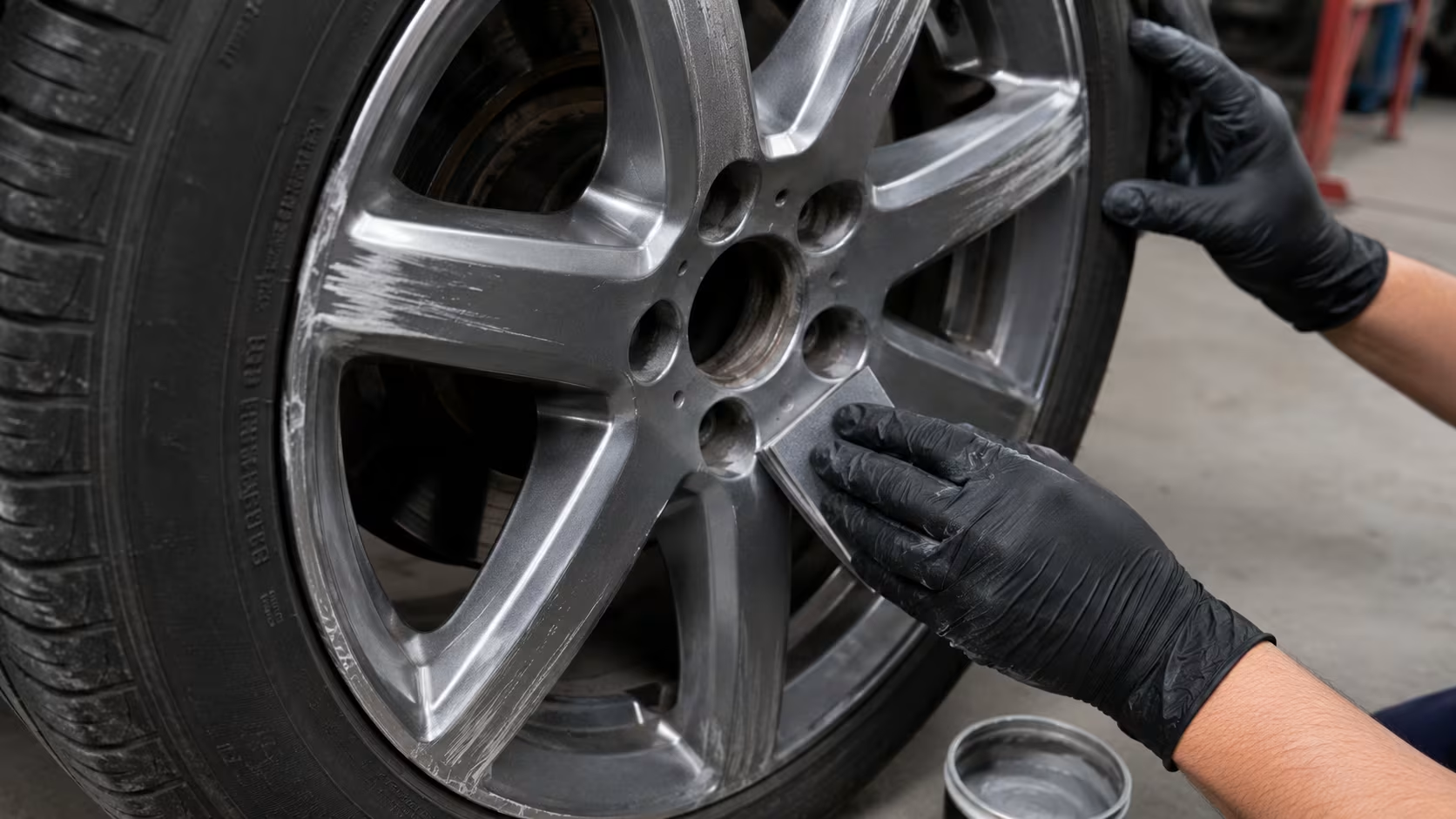
It is one of the most difficult times in the history of internal combustion engines. With tighter pollution rules, higher production costs, reduced aftermarket support, and older engine platforms, it is becoming more and more difficult to keep traditional combustion engines running and rebuild them. One important problem that is becoming impossible to ignore for enthusiasts, restoration workshops and performance tuners is what happens when critical engine components are no longer accessible.
This is where Laser Engineered Net Shaping could be one of the most crucial technologies for the future of engine reconditioning.
Instead of repairing damaged engine parts or scrapping whole engines, Laser Engineered Net Shaping (LENS) offers a means to reconstruct worn metal surfaces using high-precision laser metal deposition. Simply said, it enables for the restoration of damaged metal engine components in a layer-by-layer fashion using powdered metal and industrial lasers. But the technology is still quite expensive and highly specialized, but many automotive engineers think it might considerably increase the life of internal combustion engines, especially in racing, restoration projects and high-performance applications.
The question is no longer if 3D-printed metal works. The question is, if it can really help to keep combustion engines alive longer.
I think we’re going to see technologies like Laser Engineered Net Shaping becoming more essential as combustion engines get older and replacement parts become less available. Some time down the line, performance enthusiasts and restoration communities may find it more practical to restore existing engines rather than replace them.
READ MORE: 10 Different Types of Air Conditioners and How They Work
What Is Laser Engineered Net Shaping?
Laser Engineered Net Shaping is a state-of-the-art method of metal additive manufacturing which uses a high-powered laser to deposit metallic powder on a surface with extraordinary accuracy. LENS technology, unlike plastic 3D printing, works with heat-resistant engineering metals such as stainless steel, titanium, nickel alloys and cobalt-based materials used in automobile metallurgy.
The procedure is to push powdered metal through nozzles into a focussed laser beam. The laser melts the powder, and the substance forms in layers on the target surface. The method is computer controlled and enables specialists to reconstruct damaged areas of a component with geometrically accurate and material-specific placement.
This gives automobile engineering the ability to restore worn or damaged engine parts instead of having to replace them totally.
The idea of that alone is getting major attention in the engine remanufacturing sector.
How LENS Technology Works in Engine Repair
Conventional engine repairs generally involve machining, welding, grinding or replacing damaged parts. Laser metal deposition turns that idea on its head.
With LENS technology, specialists may scan a broken engine part, assess where it is worn, and then rebuild just that area with metal layer deposition. When the repair is complete the part can be machined back to the precise factory tolerances.
That is where LENS technology gets really fascinating from an automotive engineering point of view. Workshops may start to see damaged engine components as assets that can be rebuilt with a longer service life, rather than as disposable items.
This is particularly useful for internal combustion engines because numerous crucial components fail due to localized heat stress, cracking, corrosion or metal fatigue, rather than complete structural collapse.
In theory, a repair shop can replace only the damaged area, rather than replacing a complete cylinder head or turbocharger housing.
This difference is huge for older engines, motorsport platforms and rare performance vehicles where replacement parts may no longer be available.
Why Internal Combustion Engines Need Advanced Metal Printing
Laser Engineered Net Shaping is garnering popularity for one reason: The ICE sector is facing an increasing parts availability challenge.
As development switches to electrification, several manufacturers are reducing long-term combustion engine support. That implies eventually older engine platforms may lose replacement parts. This causes a severe sustainability concern for the repair community and performance workshops.
Advanced engine manufacturing through LENS technology may help solve part of that problem by enabling:
- Engine component rebuilding
- Precision metal repair
- Remanufactured engine components
- Custom engine manufacturing
- Small-batch performance part production
Cylinder Head Restoration and Engine Block Repair
One of the more potential applications of 3D printed metal in ICE repair is the restoration of cylinder heads.
The cylinder heads are subjected to high heat stresses. Typical areas of failure in high mileage or high performance engines are cracks around valve seats, combustion chambers, coolant passages and exhaust ports. Historically, serious damage generally translates into total replacement.
Another method is laser metal deposition.
LENS technology could be used to rebuild damaged material with heat-resistant alloys designed to tolerate combustion temperatures. The repaired portion can then be machined and resurfaced and put back into service.
Precision metal repair procedures can also benefit engine block restoration. Damaged deck areas, worn bearing surfaces or localized cracking could potentially be fixed rather than discarded.
This might be a huge bonus in the future for historic car restoration firms.
Many uncommon engines just don’t have replacement castings available any more. In some instances, the only remedy might be to rebuild the original component.
Turbocharger Repair and High-Temperature Components
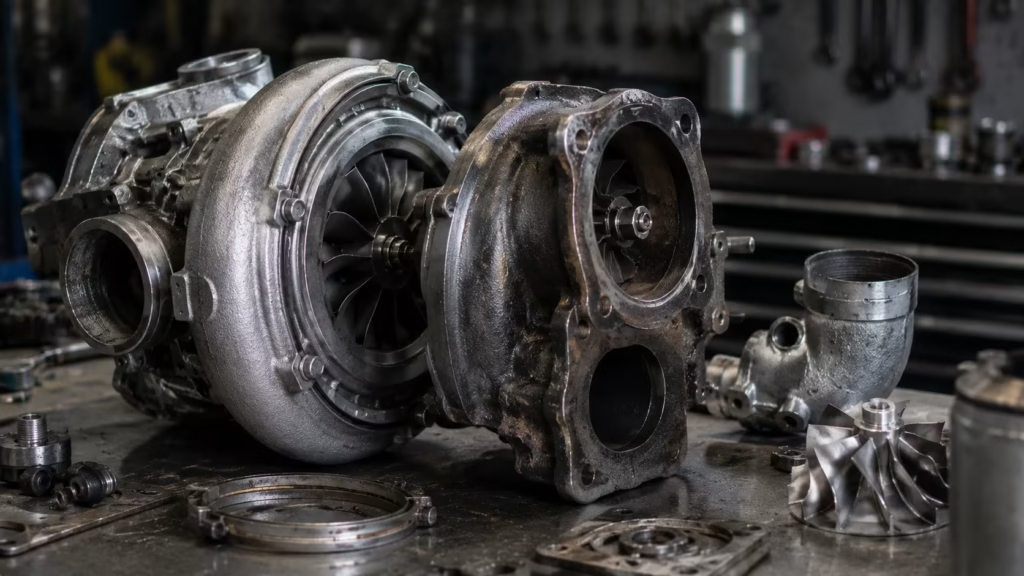
Turbocharger housings are another area where Laser Engineered Net Shaping may find increased use.
Turbo systems work at severe temperature and pressure cycles leading to thermal wear and cracking with time. Conventional welding repairs are feasible but may result in stress deformation or inhomogeneous material characteristics.
With LENS technology you can deposit metal much more precisely.
This digitally controlled repair procedure allows specialists to reconstruct damaged areas with accurate control of heat input and material composition. This may give better resilience to thermal stress than certain conventional repair approaches.
Such precision is vital in motorsport engine engineering, where the durability of the turbocharger is directly related to the reliability of performance.
Advanced manufacturing technologies are already extensively used by performance racing teams and metal additive manufacturing fits well into that setting.
Can 3D Printed Engine Parts Handle Real ICE Stress?
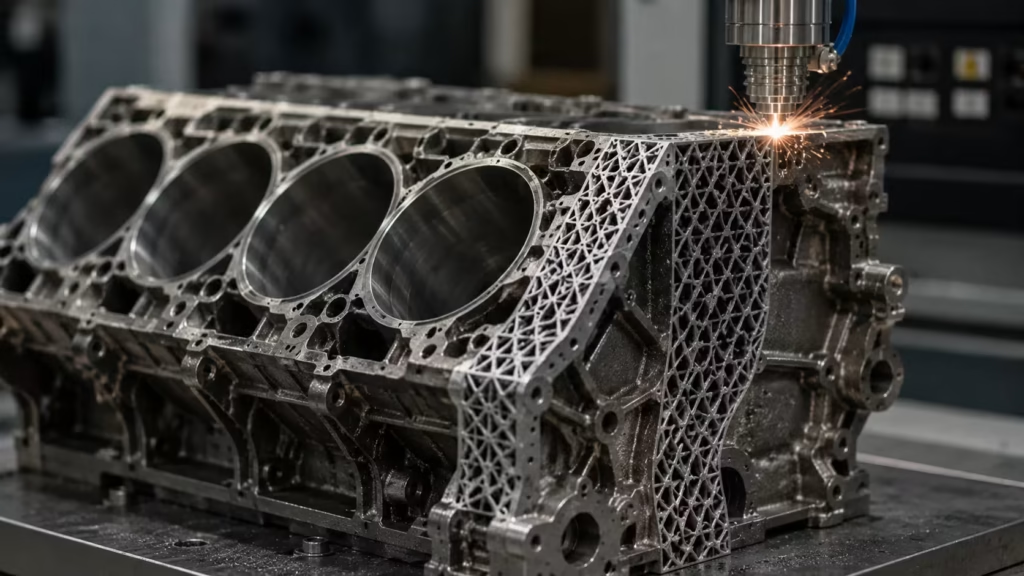
Durability is still one of the key problems for 3D printed engine parts.
Combustion engines generate intense vibration, rapid thermal cycling, pressure spikes, and friction loads. Any repaired or additively created part must consistently tolerate these circumstances.
Modern industrial laser repair devices are making fast inroads into this field.
Now, researchers and engineering organizations are creating wear-resistant engine components using nickel superalloys, cobalt-chrome compounds, and sophisticated steel mixes, all tailored for high-temperature automobile applications.
In some circumstances, additively repaired surfaces may actually be better than the original material because engineers can tune the deposited alloy for specific stress conditions.
This possibility is especially significant for rebuilding performance engines, as increased durability immediately translates to reliability under intense operating circumstances.
That said, the tech is still limited.
Material consistency, long term fatigue resistance and repeatability are still major engineering issues. Not all engine components are perfect candidates for laser metal deposition.
Even high-load rotating components, such as crankshafts and connecting rods, nevertheless require very careful evaluation before being widely adopted.
How LENS Differs From Traditional Casting and Machining
Traditional engine manufacturing usually begins with casting, forging, and subtractive machining. Material is removed until the final part geometry is achieved.
Laser Engineered Net Shaping works differently.
Instead of removing material, LENS adds material only where needed. That approach offers several advantages for engine restoration technology:
- Reduced material waste
- More precise localized repairs
- Faster prototype development
- Easier customization for performance engines
- Better support for low-volume production
Could Motorsport and Performance Tuning Drive Adoption?
Motorsports will probably be a major contributor to the widespread use of Laser Engineered Net Shaping in auto maintenance.
Precision engineering, specialized fabrication and experimental metallurgy are already highly relied on in performance engine repair. Racing teams don’t often mind paying for expensive manufacturing processes if they can increase reliability or decrease downtime.
LENS technology fits very well with those goals.
The ability to create custom cooling channels, reinforced high-heat zones, lightweight metal structures and rapid repair capacity makes advanced metal printing interesting for racing applications.
As combustion platforms grow more specialized in the future, the performance tuning business may also adopt engine lifecycle extension technology.
Not many devotees will entirely give up the ICE performance culture. Instead, combustion engines might creep into a niche hobbyist market with superior restoration and remanufacturing technology.
In such a setting the ability to re-create the rare or aging components becomes very crucial.
The Biggest Limitations of LENS Technology
Despite its potential, Laser Engineered Net Shaping is not a miracle solution for the future of combustion engines.
The equipment itself is extremely expensive. Industrial laser repair systems require advanced software, controlled environments, and highly trained operators. Production speed can also be relatively slow compared to mass manufacturing methods.
Material compatibility remains another challenge.
Different engine alloys respond differently to thermal expansion, cooling rates, and stress loading. Improper deposition can create microscopic weaknesses that affect long-term durability.
Large-scale adoption is also limited because most repair shops simply do not have access to advanced metal additive manufacturing systems.
For now, LENS technology is most realistic for:
- Motorsport engineering
- Aerospace-derived automotive applications
- High-performance engine rebuilding
- Restoration workshops
- Prototype engine development
- Limited-production performance vehicles
Conclusion- Can Laser Engineered Net Shaping Help Save the Internal Combustion Engine?
Laser Engineered Net Shaping probably will not “save” the internal combustion engine in the traditional sense. Regulations, electrification, and changing market priorities are reshaping the automotive industry too aggressively for that.
But it may help extend the life of combustion engines far longer than many people expect.
Realistically, LENS technology may not preserve internal combustion engines as mainstream transportation forever, but it could absolutely help preserve ICE culture within enthusiast, restoration, and motorsport communities for decades longer than expected.
For restoration communities, motorsports, performance builders, and automotive enthusiasts, advanced metal printing could become one of the most important tools for preserving ICE platforms in the coming decades.
The real value of LENS technology is not mass production. It is precision rebuilding, component restoration, and lifecycle extension.
In a future where replacement engine parts become increasingly rare, the ability to digitally rebuild damaged metal components may keep iconic combustion engines running long after conventional manufacturing support disappears.
That possibility alone makes Laser Engineered Net Shaping one of the most fascinating technologies in modern automotive engineering.