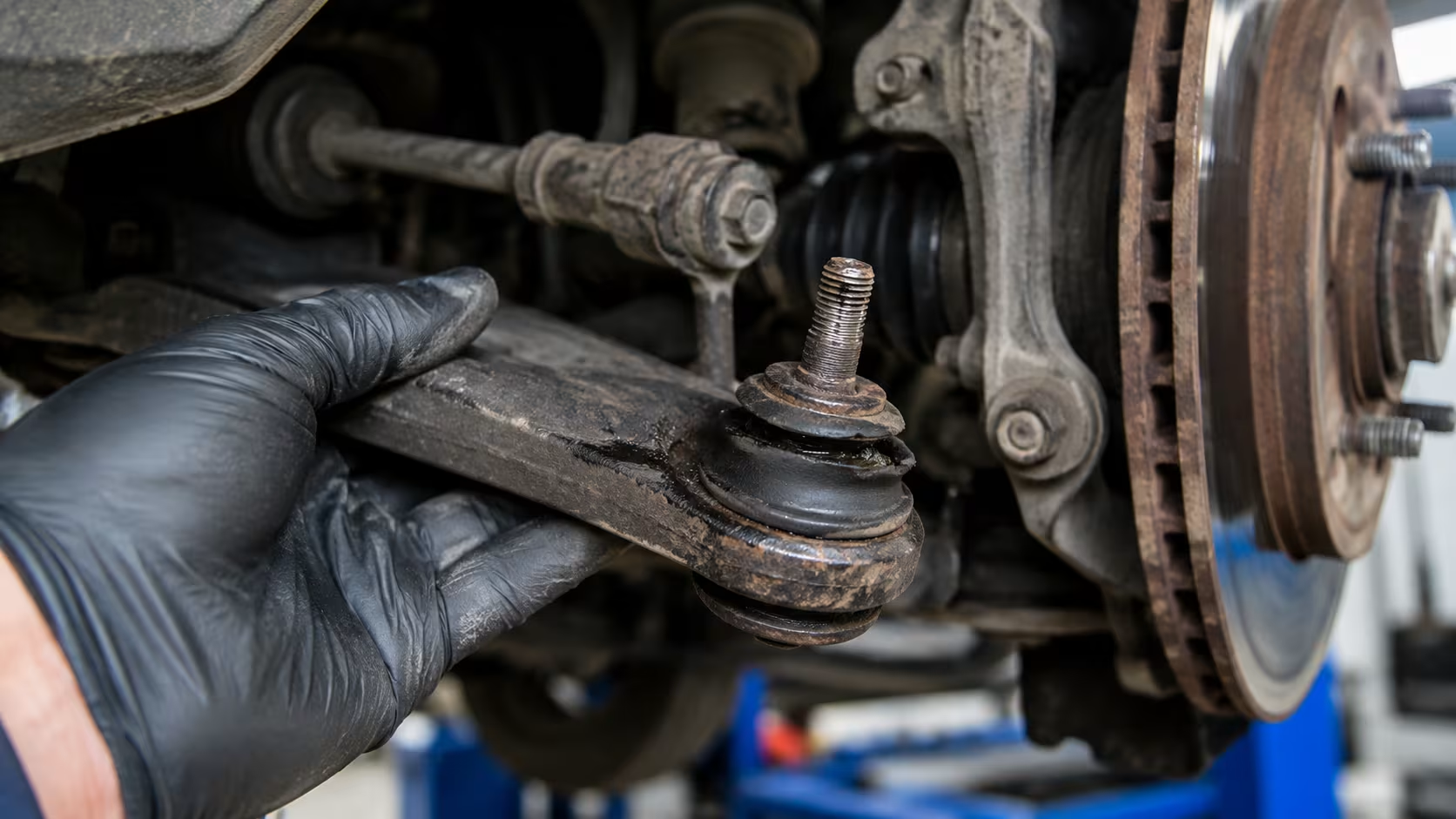
Problems with your suspension usually don’t correct themselves, and neglecting them can lead to poor handling, uneven tire wear and expensive repairs. Worn ball joints are one of the most prevalent suspension problems drivers experience. Catching bad ball joint symptoms early on can help you avoid severe steering difficulties and prevent further damage to your suspension system.
I have observed many drivers, in my expertise evaluating suspension systems, think that a tiny clunk or vibration was caused by old tires or bumpy roads. After careful inspection it was usually found that the true problem was a worn ball joint that had accumulated excessive play over time. Catching the problem early typically meant that they could avoid having to replace more suspension parts and get the handling back to safe before the damage got serious.
READ MORE: Leather Car Seat Repair Kit: How to Choose the Best Kit & Repair Leather Seats
What Is a Ball Joint?
A ball joint is a ball and socket that links the control arm to the steering knuckle. This permits the suspension to travel up and down smoothly while steering the front wheels.
Think of it as a flexible suspension pivot point. Ball joints are critical to your car having accurate steering and suspension action.
Most current passenger cars have upper and lower ball joints, however other suspension systems employ just lower ball joints. The lower ball joints normally take on the bulk of the vehicle’s weight and tend to wear out quicker.
Ball joints are sealed with a rubber dust boot and filled with grease; If the grease is kept clean and sealed in the joint, it will last many years. Wear accelerates immediately upon contamination or loss of lubrication.
How Does a Ball Joint Go Bad?
As with any other moving suspension part, ball joints are subject to normal wear and tear over time. Most start to exhibit symptoms of wear after being driven many miles, while bad roads might cut their lives short.
A ripped dust boot is one of the most typical causes of premature failure. When the protective boot is broken, grease escapes and dirt, water and road debris get into the joint.
Friction inside the socket slowly builds up due to corrosion. The ball doesn’t move smoothly any more. It starts to wear down the metal socket, making it too loose.
The suspension also takes a lot of beating from going over pot holes, damaged roads and speed breakers. These frequent collisions increase the rate of ball joint deterioration.
Older serviceable ball joints are lubricated from time to time. If you don’t lubricate, metal parts will wear out considerably faster than they should.
Loading your car with too much stuff can also put extra stress on your suspension, decreasing the life of the ball joints and surrounding parts.
5 Symptoms of a Bad Ball Joint
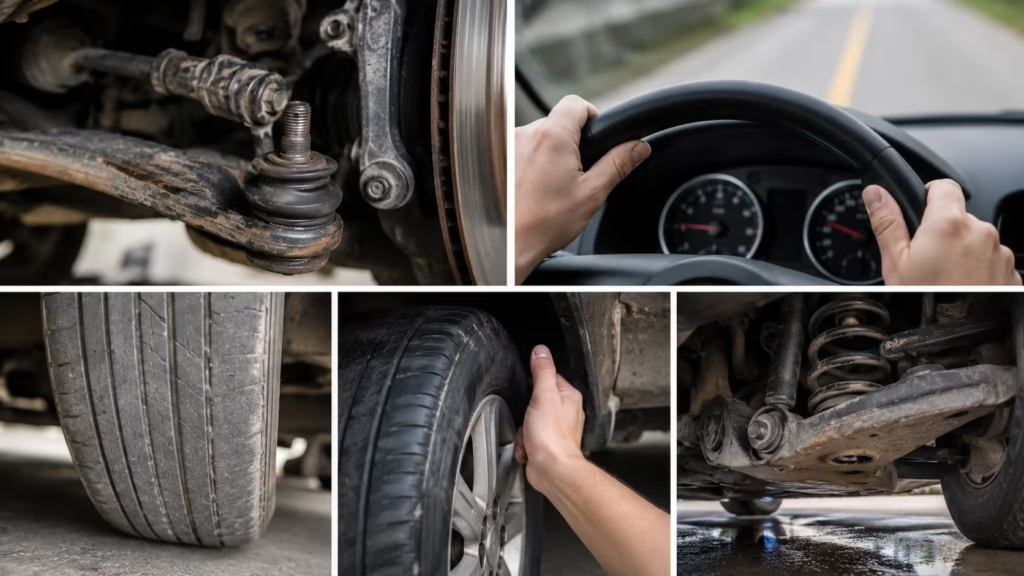
Catching the signs of faulty ball joints early can help you have the problem repaired before it does any damage to your steering, tires or suspension alignment. Bad ball joints symptoms are frequently caused by worn ball joints, although worn tie rod ends, control arm bushings, wheel bearings or faulty wheel alignment can produce similar problems. It is always advisable to properly examine before replacing parts .
1. Clunking Noise Over Bumps
One of the first signs of a faulty ball joint is a distinct clunking or knocking noise as you drive over potholes, speed bumps or uneven roadways.
As the ball joint wears internally, it allows more play between suspension components. Every time the suspension compresses, the looseness causes the metal pieces to move slightly, generating a dull banging sound.
As wear develops the noise tends to grow. Drivers tend to initially hear it at low speeds when there’s little road noise.
The excessive movement might accelerate wear on neighboring suspension parts and if left unchecked.
2. Steering Wander or Loose Steering
A worn ball joint can make the steering feel loose or unpredictable.
The car may wander inside the lane and require regular steering corrections instead of following a straight path. You could also notice the steering wheel seems less sensitive turning a bend.
The wear in the joint alters the geometry of the suspension, so the car handles less stable, especially while you’re traveling on the highway or making quick lane changes.
This symptom might also be similar to problems caused by worn tie rods or bad wheel alignment thus a full suspension examination is required.
3. Uneven Tire Wear
Uneven tire wear is another common indicator of bad ball joint symptoms.
Worn ball joints enable too much wheel movement, which eventually changes the alignment angles. This causes some parts of the tire to be heavier than others.
Depending on the way the suspension has moved, you could see feathering, excessive wear on the inside edge, or unusual wear on the outside edge.
Failure to address this issue can dramatically decrease tire life and raise replacement cost.
4. Steering Wheel Vibration
A loose suspension component can create vibrations that travel through the steering wheel.
The vibrations from bad ball joints might be different depending on the road unlike wheel balance difficulties. It may be more obvious while driving on bumpy pavement or when the suspension is under pressure.
The more the looseness, the less precise the steering, the less stable the car seems at higher speeds.
Since there are various suspension parts that might create similar vibrations, technicians will often test the complete front suspension before deciding on the exact defective item.
5. Squeaking or Creaking Noise
A squeaking or creaking sound during slow turns or while driving over bumps is another warning sign of worn ball joints.
As the grease leaks from a broken dust boot, the inside metal surfaces begin to scrape against one another. Friction and squeaky sounds especially while the suspension is moving are caused by lack of lubrication.
When I do suspension inspections I see a lot of drivers who believe that old tires or bad wheel bearings are the cause of these noises. Once the car was up and checked for excessive play, the true problem was usually a loose ball joint with a torn grease boot. Replacing the damaged joint quickly stopped the noise and gave a much tighter steering feel, proving the importance of a correct diagnosis.
The squeaking may be intermittent at first, but normally occurs more often as the wear advances. Waiting too long might cause the ball joint to become more loose which increases the chances of more severe suspension damage.
What Causes Ball Joints to Wear Out?
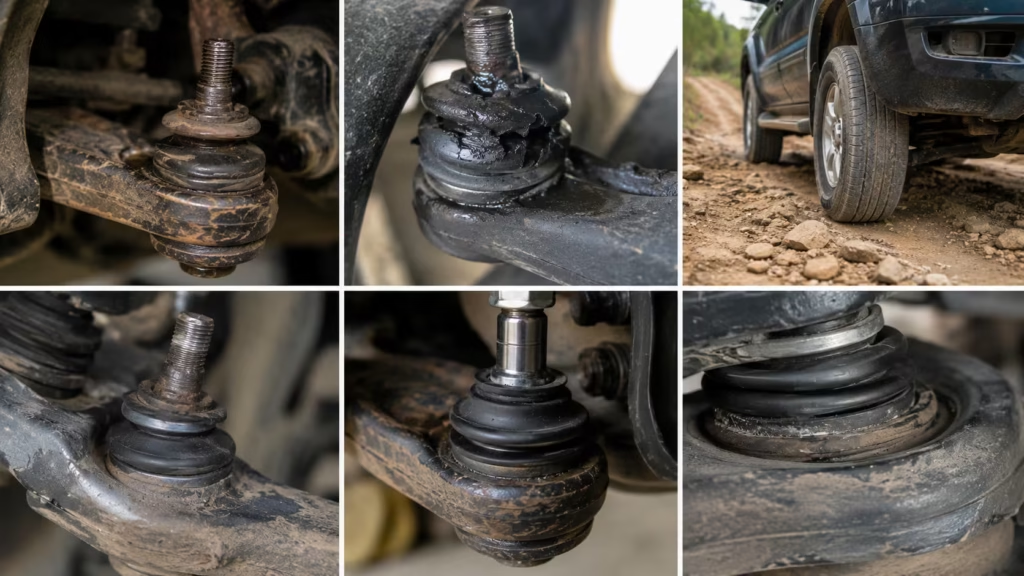
Ball joints are meant to survive for many years, but they wear down over time with regular suspension movement and road impacts. There are several things that can dramatically reduce their lives.
The most typical reason is high mileage. The ball and socket go through thousands of cycles of movement during regular driving and the interior surfaces wear down and become loose over time.
Another big cause of premature failure is a torn grease boot. Once the seal is broken, grease leaks out and water, dust and road grit get into the joint, wearing and corroding it faster.
Driving constantly on potholes, damaged roads, gravel or speed bumps puts extra strain on the suspension. Aggressive driving, forceful cornering, and overloading the vehicle can increase stress on the ball joints.
Older usable ball joints need frequent lubrication. Without new oil the friction will rise and the metal parts will wear out considerably faster.
How to Check for Bad Ball Joint Symptoms
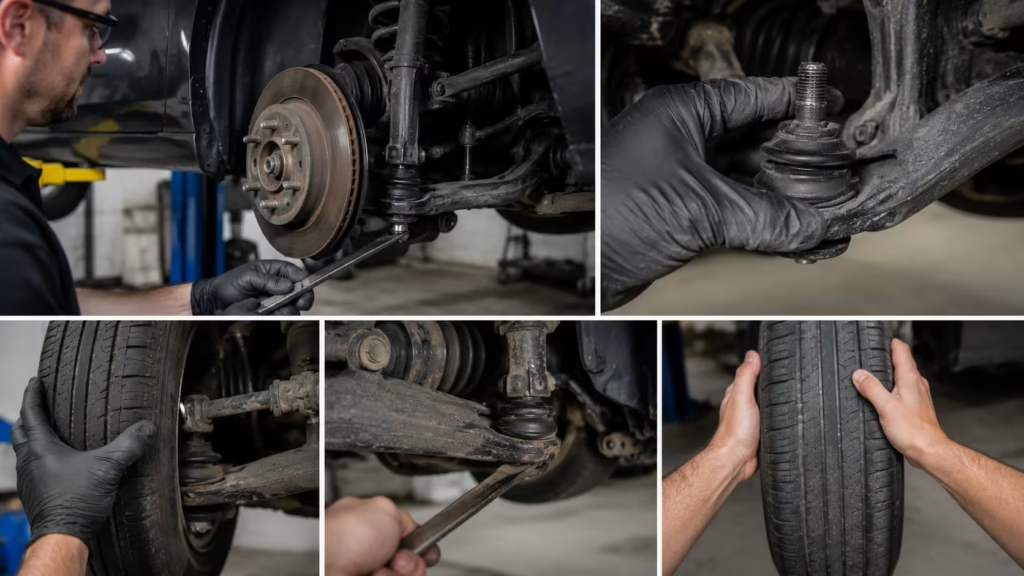
If you think you are experiencing terrible ball joint symptoms, then a diligent check might assist you to see excessive wear before ultimate failure. Always work on a level surface and support the vehicle securely with jack stands before inspecting any suspension components.
Visual Inspection
First inspect the rubber dust boot. Look for fractures, rips, leaking oil or corrosion around the ball joint. A torn boot enables pollutants to enter and often suggests that you should take a closer look at the joint.
Lift Test
Raise the front of the car at the manufacturer’s lifting points. Have someone slowly spin the wheel with the wheel off the ground. Watch the suspension.
Wheel Movement Test
Support the tire at the top and bottom and rock it back and forth. A worn ball joint can cause excessive movement, although the same play can be caused by worn wheel bearings. As a rule, a technician will check both parts before giving a diagnosis.
Pry Bar Inspection
To inspect the vertical movement of the ball joint, professional technicians commonly use a pry bar under the tire or control arm. Any major play above the manufacturer’s standards is generally a sign of severe wear.
Professional Suspension Inspection
If you see the same symptoms on many suspension parts, it is best to get it checked by a specialist. Mechanics employ unique instruments and manufacturer specs to determine bad ball joints, bad tie rods, bad control arm bushings or bad steering parts.
Ball Joint Replacement Cost
The cost of replacing a ball joint varies depending on the vehicle and suspension design.
If the ball joint is available separately, the part is generally affordable, while labor depends on how difficult it is to remove and install. On some vehicles, the ball joint is permanently attached to the control arm, requiring replacement of the complete control arm assembly.
As a general estimate, replacing a single ball joint typically costs $150–$450, including parts and labor. Vehicles that require a complete control arm replacement may cost $300–$800 or more per side.
A front wheel alignment is also recommended after replacement because suspension geometry changes during the repair. Skipping the alignment may lead to uneven tire wear and poor handling.
Tips to Extend Ball Joint Life
Although normal wear cannot be avoided completely, a few maintenance habits can help extend ball joint life.
- Avoid potholes, curbs, and rough roads whenever possible.
- Inspect suspension components during routine servicing.
- Replace damaged grease boots immediately if the ball joint is still serviceable.
- Keep your wheel alignment within factory specifications.
- Avoid overloading the vehicle beyond its recommended weight capacity.
- Have the front suspension inspected whenever you notice unusual noises, steering looseness, or uneven tire wear.
Conclusion
If you recognize the signs of a faulty ball joint early, you’ll pay less for repairs, and you’ll increase safety and driving comfort. Warning indications include clanking sounds, loose steering, irregular tire wear, steering wheel vibration, and squealing noises and these should be addressed immediately.
I observed that drivers who replaced damaged ball joints early on frequently didn’t have to replace other suspension parts and pricey tires. Often, solving the problem quickly brought back smooth steering, and the car felt considerably more steady on the road. If you see multiple of these warning signals at once, don’t wait for a minor problem to evolve into a severe safety issue, get your suspension evaluated by a competent technician.