Vernier caliper is a precision measuring equipment which is used to measure internal, exterior dimension and depth with great accuracy. One of the most essential ideas related to this instrument is vernier caliper least count. This establishes the smallest measurement that can be reliably read on the device. It is a fundamental topic for engineers, technicians, students and quality inspectors. It influences directly the precision and reliability of measurement.
The least count of vernier caliper plays a very important role in getting accurate and consistent measurement results whether you are doing dimensional inspection in a workshop or measuring sizes of components in manufacturing.
READ MORE: Laser Engineered Net Shaping: Can 3D-Printed Metal Extend ICE Life?
What Is Vernier Caliper Least Count?
The vernier caliper least count refers to the smallest value that can be measured accurately using a vernier caliper. In layman’s words, it is the smallest measurement increment the device can measure.
This idea is significant since it influences the accuracy of the device. The smaller the least count, the more accurate is the measurement.
Engineers and technicians rely on the vernier caliper least count to perform precise measurements in applications where even minor dimensional variations can affect product quality and performance. It is very important to know least count of vernier caliper because vernier calipers are commonly used as precision measuring devices in mechanical measurement and industrial inspection for precise results.
Why Vernier Caliper Least Count Matters
The vernier caliper least count directly influences measurement accuracy. When measuring machine parts, automotive components, or fabricated products, accurate dimensions are critical.
A properly calculated vernier caliper least count helps in:
- Improving measurement accuracy
- Reducing human errors
- Enhancing quality control processes
- Supporting precision engineering applications
- Ensuring reliable industrial measurement
Parts of a Vernier Caliper Involved in Least Count Calculation
Several parts of a vernier caliper contribute to accurate measurement and the calculation of vernier caliper least count.
Main Scale
The main scale provides the primary measurement reading. The value of one main scale division is essential for calculating the vernier caliper least count.
Vernier Scale
The vernier scale allows accurate readings to be taken between major scale divisions. The least count formula is based on the number of vernier scale divisions.
Measuring Jaws
External and internal measuring jaws measure outer and inner dimensions. It is crucial to align properly to obtain an accurate result.
Depth Rod
The depth rod is used for measuring depth of holes, slots and recesses. If used properly you get dependable depth readings.
Lock Screw
The lock screw holds the slider in place during measurement . This helps to maintain the readings constant and reduce the inaccuracy in measurement.
Vernier Caliper Least Count Formula
The standard vernier caliper formula used to determine least count is:
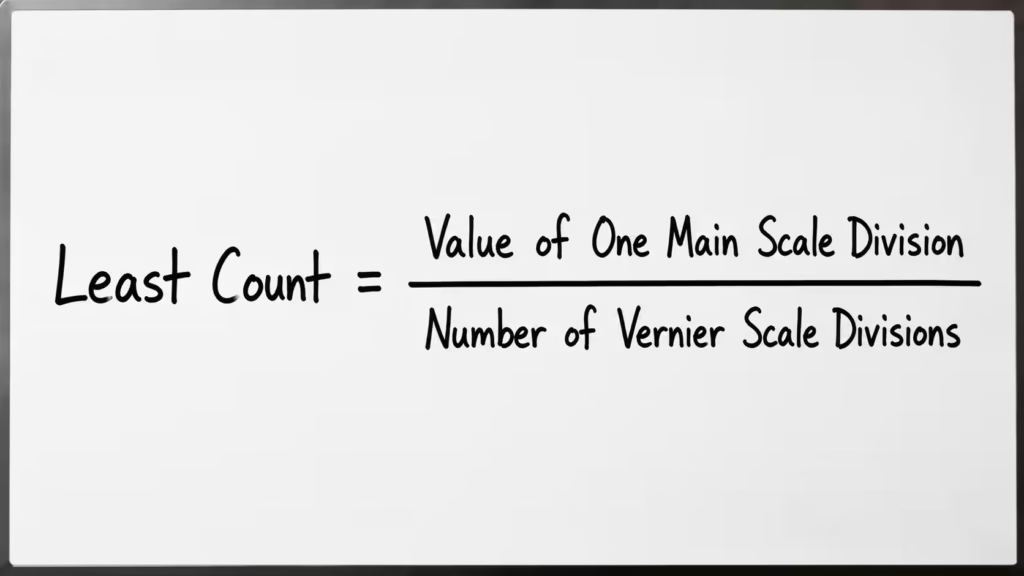
Where:
- The value of one division on the main scale is called as Main Scale Division (MSD).
- Vernier Scale Divisions (VSD) are total divisions on vernier scale.
The vernier caliper least count is obtained by dividing the value of one main scale division by the number of divisions on the vernier scale. The vernier scale works by breaking the main scale down into smaller measurable divisions, which increases the precision of the measurements.
How to Calculate Vernier Caliper Least Count
Understanding how to calculate vernier caliper least count is straightforward. First find the value of one major scale division. Suppose, for example, that one major scale division is equal to 1 mm. Next count the number of divisions in the vernier scale. Let us assume that the vernier scale has 10 divisions.
Now apply the formula:
Least Count = 1 mm ÷ 10
Least Count = 0.1 mm
With this tool you may measure dimensions with an accuracy of up to 0.1 mm.
For example, if a component measures 25.4 mm, the vernier caliper least count enables a more precise reading than a standard ruler.One of the key reasons for the broad usage of vernier calipers in engineering workshops and industrial measuring applications is the greater level of precision.
Types of Vernier Caliper
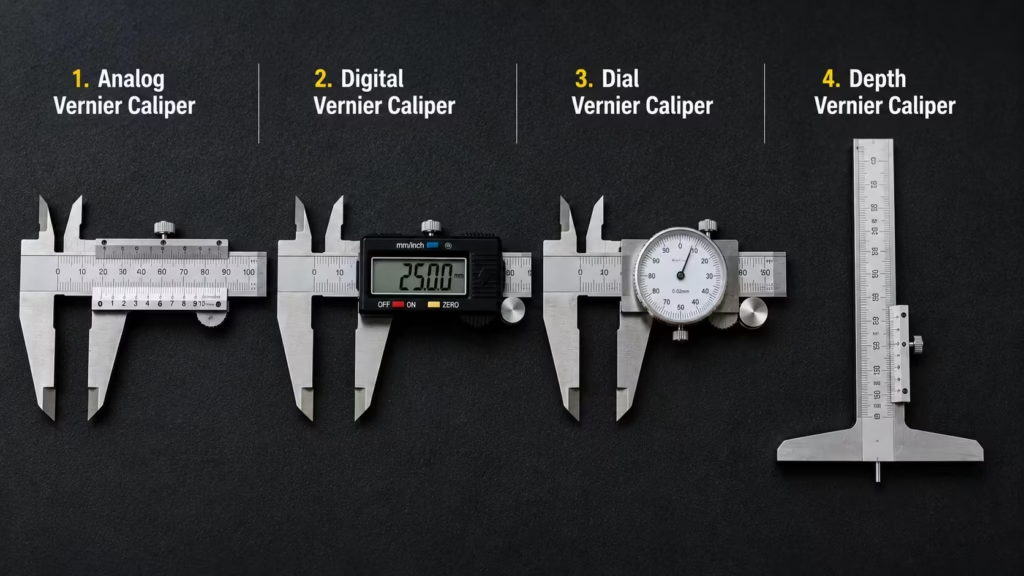
The design and reading mechanism of different types of vernier calipers vary, which might impact the accuracy of measurement, readability and convenience of use. Knowledge of these differences might allow users to pick the most appropriate instrument for a given measuring job.
Analog Vernier Caliper
An analog vernier caliper uses a traditional main scale and vernier scale combination. The vernier caliper least count in these instruments commonly ranges from 0.1 mm to 0.02 mm, depending on the model.They are used extensively in mechanical measurement, educational laboratories and workplace inspection when precise manual reading is required.
Digital Vernier Caliper
Digital vernier calipers provide the measurement on a digital display. These tools are very accurate, decrease mistakes in reading and give fine resolution for easy interpretation. They are utilized in precision engineering, measurement and quality control applications in industrial settings.
Dial Vernier Caliper
A dial vernier caliper utilizes a dial indication to read fractional measures. This design increases readability and helps ensure reliable measuring results. It is commonly favored for industrial procedures and dimensional inspection jobs.
Depth Vernier Caliper
A depth vernier caliper is specifically designed to measure the depth of holes, slots, and recesses. The vernier caliper least count plays an important role in obtaining precise depth readings, making these instruments valuable in machining operations, fabrication work, and tool rooms.
Common Errors While Using Vernier Caliper Least Count
Even when the vernier caliper least count is known correctly, measurement errors can still occur due to improper usage, poor maintenance, or incorrect reading techniques. It is important to know these typical mistakes for correct and trustworthy measurements.
Zero Error
Zero error is said to be present when the instrument does not show zero reading when the measurement jaws are fully closed. This inaccuracy directly impacts the final measurement and must be removed before taking the measurements.
Reading Error
Reading mistakes are caused by misreading the alignment of the main scale and the vernier scale. Even a little inaccuracy while reading the scales may lead to false measurement readings.
Misalignment
The workpiece is not correctly positioned between the jaws of the measurement tool. The incorrect placement is also a source of inaccuracy of the measurement and may result in the inconsistency of the measurement.
Dirt on Measuring Surfaces
Dust, grease or dirt on the measuring jaws or the workpiece might lead to minor gaps between surfaces. These gaps degrade accuracy and can lead to false measurements.
Improper Handling
Applying too much pressure during the measurement can distort the reading and damage the calibration of the equipment. Proper handling techniques help maintain accuracy and ensure that the vernier caliper least count delivers reliable measurement results.
Applications of Vernier Caliper Least Count
The vernier caliper least count is important across many industries because it determines the level of measurement precision that can be achieved. Accurate measurements help improve product quality, reduce errors, and ensure compliance with engineering specifications.
Automotive Workshops
In automotive workshops, vernier calipers are used to measure shafts, brake components, engine parts, and other critical components. Precise measurements help ensure proper fitment and reliable vehicle performance.
Mechanical Engineering
Mechanical engineers utilize vernier calipers for dimensional verification throughout design, development and manufacture of components. The vernier caliper least count helps ensure accurate measurements, which are essential for maintaining engineering standards, proper fitment, and overall functionality.
Manufacturing
Vernier calipers are used in production contexts to ensure that components satisfy defined tolerances and quality requirements. Consistent measurements prevent material waste and increase product quality and manufacturing precision. The vernier caliper least count plays a key role in achieving the precision required for efficient and reliable manufacturing processes.
Fabrication
Vernier calipers are critical tools for fabrication specialists that must maintain dimensional uniformity in metal structures, assemblies and custom-made components. This helps to realize a precise fitting and assembly.
Quality Inspection
Quality inspectors use vernier calipers for dimensional inspection and process validation. The vernier caliper least count enables precise measurements that help identify defects and verify product compliance.
Industrial Measurement
Industrial facilities depend on reliable measuring instruments to support production quality. Vernier calipers are appropriate for accurate measurement applications in settings where minor dimensional differences might impair performance and dependability.
Tips for Obtaining Accurate Measurements
To maximize the benefits of the vernier caliper least count, follow these practical tips:
- Calibrate the instrument regularly.
- Verify zero position before measuring.
- Keep measuring surfaces clean.
- Apply consistent measuring pressure.
- Read scales carefully.
- Avoid parallax errors during observation.
- Store the instrument properly to maintain calibration accuracy.
Conclusion
The vernier caliper least count is one of the most important factors affecting measurement accuracy and precision.The formula and the way to compute it allow the user to acquire accurate measurements in engineering, manufacturing, and quality inspection applications. Knowing the sorts of vernier caliper is equally essential, as different types of vernier caliper have varied levels of readability, accuracy and measurement convenience. By mastering the vernier caliper least count and applying proper measurement techniques, users can achieve highly accurate and consistent results in professional and educational environments.