Types of Hammers and Their Uses: In every repair job, construction job or creative work, then tools are the silent assistants. The hammer is one such tool among them that is the oldest and most reliable tool used by man.
Regardless of whether you are nailing something into the wall, hammering metal in the workshop or hammering something in the construction site, you can almost always find a hammer. This guide will discuss the various kinds of hammers, their applications, and the places of their application.
What is a Hammer?
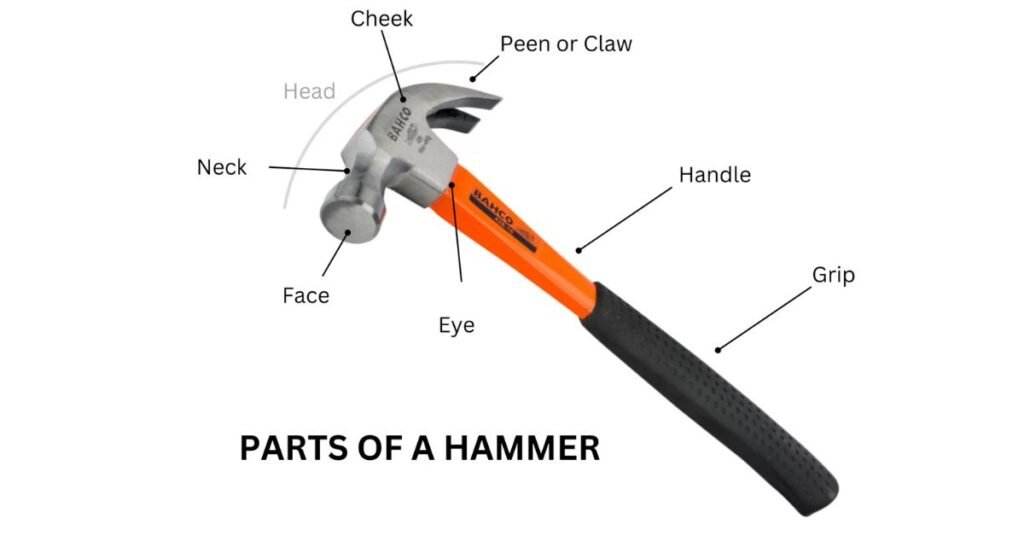
A hammer is a manual tool and it is used to hit objects. It is primarily employed on the driving of nails, cutting of materials, shaping metal and the construction of structures. The device is typically a heavy metal head on a handle of wood, fiberglass or steel.
The sharp surface is referred to as the face and the reverse side can be of various shapes according to the intention of the hammer. Others are set to do the hard work, whereas others are crafted to do the delicate work.
Common Types of Hammers
This is because various jobs have different hammer designs. Some of the most common hammers that are used in workshops and construction sites are given below.
Hand Hammer
One of the simplest and most common tools that is used in the workshops is the hand hammer. Hardened steel is normally used to make it with a wooden or fiberglass handle.
These are light striking hammers that are utilized in the fitting of parts, driving of small size nails or even general repair.
Ball Peen Hammer
Generally, a ball peen hammer is employed in metalworking. One side of it bears a flat striking face, and the other is round and ball-shaped.
The primary uses of this hammer are:
- Riveting metal pieces
- Shaping metal surfaces
- Driving in of dents or curves into metal sheets.
It happens to be one of the most important devices of mechanics and metal workers.
Sledge Hammer
Sledgehammer is made to be heavy duty. It is hefty headed with a huge head and long handle so as to produce the impact force.
These hammer are mostly applied in:
- Breaking concrete or stones
- Straightening iron bars
- Demolition work
- Heavy forging tasks
It is one of the heaviest manual tools with a weight normally ranging between 4 kg and 10 kg.
Claw Hammer
A carpentry and household hammer that is the best known is the claw hammer. One is all flat striking and the other is curved and pulled out nail claw.
This hammer is commonly used by carpenters and DIYers:
- Driving nails into wood
- Removing nails
- Basic woodworking projects
- Club Hammer
A lump hammer or club hammer is a type of hammer with a short handle and a heavy head which is divided in two.
It is mostly used for:
- Breaking small stones
- Striking chisels
- Masonry work
Its small size makes it powerful due to its use in controlled areas.
Rubber Mallet
Rubber mallet is a rubber-headed soft faced hammer. It also provides soft blows that do not harm the surface.
This hammer is ideal for:
- Woodworking
- Sheet metal work
- Assembling furniture
- Adjusting delicate parts
It is particularly handy in cases when the surface needs to be scratch-free.
Dead Blow Hammer
Dead blow hammers are meant so that when hitting they produce minimal rebound. They are frequently stuffed with metal shot or sand in the hollow bones of their heads.
These hammers are normally applied in:
- Automotive repairs
- Mechanical assembly
- Woodworking
They provide restrained force without causing surface damage.
Framing Hammer
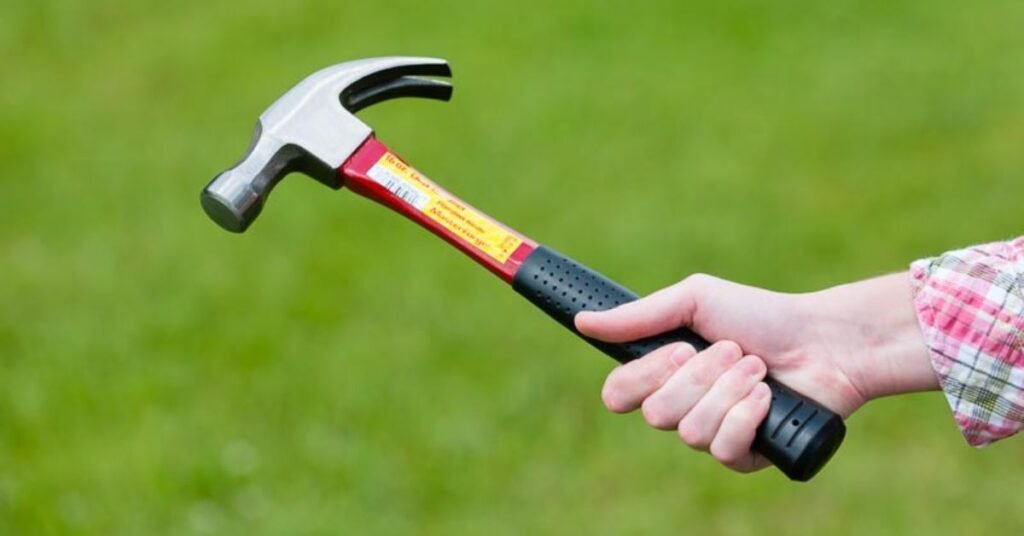
A claw hammer is like a framing hammer except it is stronger and heavier. It is primarily employed in construction of houses and framing.
Key features include:
- Demolition straight claw.
- Good-heavy-head to drill big nails.
- Long grip of swings with lots of force.
Contractors and builders usually use this hammer to perform structural work.
Specialty Types of Hammers
In addition to the normal hammers, specialty tools are available in a range of industry-specific tools.
Engineering Hammer
This hammer is used in the mechanical workshops in order to shape metal parts and to strike punches or chisels.
Brick Hammer
This hammer has a flat face on one side and a chisel like edge on the other one. It is applied in cutting or shaping bricks in the masonry work.
Welding Hammer
It is also referred to as a chipping hammer and is used by the welders to scrap slag off the welded joints once they have cooled down.
Rock Hammer
Geologists and archaeologists normally use a rock hammer to break and study rocks.
Cross Peen Hammer
This hammer has a peen ( Hammer, 2010, para. 2). It can be used in shaping metals and in making grooves.
Basic Parts of a Hammer
Whilst construction of a hammer may differ, the majority of hammers have the following components:
- Head: The striking part which is heavy metal.
- Face: This is the flat surface of the object that strikes the object.
- Peen: The other side utilized to shape or split.
- Eye Hole: This is where the handle is fitted.
- Handle: This is the place that one holds the hammer to swing it.
The performance and balance of the hammer are enhanced by each of the parts.
Frequently Asked Questions (FAQs)
What is the type of the most used hammer?
The most popular hammer is the claw hammer, as it is ideal in general carpentry and construction of houses.
What hammer is the one you use in metal work?
Peen hammer: The metalworking hammer is known as the ball peen hammer and is used to shape metal and install rivets.
How does a mallet differ with a hammer?
The mallet has a bump that is of softer rubber or wood whereas a hammer normally has a metal head that is stronger to hit.
What is the purpose of using dead blow hammers?
Dead blow hammers absorb rebound and provide controlled force so they are used in the mechanical and automotive industry.
Which is the best hammer to use during a construction work?
Framing hammers and sledgehammers are widely applied in the construction industry because they are very strong and durable.
Disclaimer: The article is informational and educative in nature. The use and specification of the tools can be different according to the manufacturers and professional practice. Be careful of the correct safety measures always and read the instructions or refer to a manual when handling tools at work or industry.