Propeller Shaft vs Drive Shaft: When we discuss the movement of a car, the first thing that comes to the mind of the majority is the engine or the wheels. There is however, a very important mechanical system between the engine and the wheels, which transfers power.
The drive shaft and the propeller shaft are two significant components of this system. These two terms are used interchangeably, though in some instances they do not imply the same thing. These two components significantly expose power within the engine to the wheels, although they have a slightly different mission to the vehicle design.
What is a Propeller Shaft?
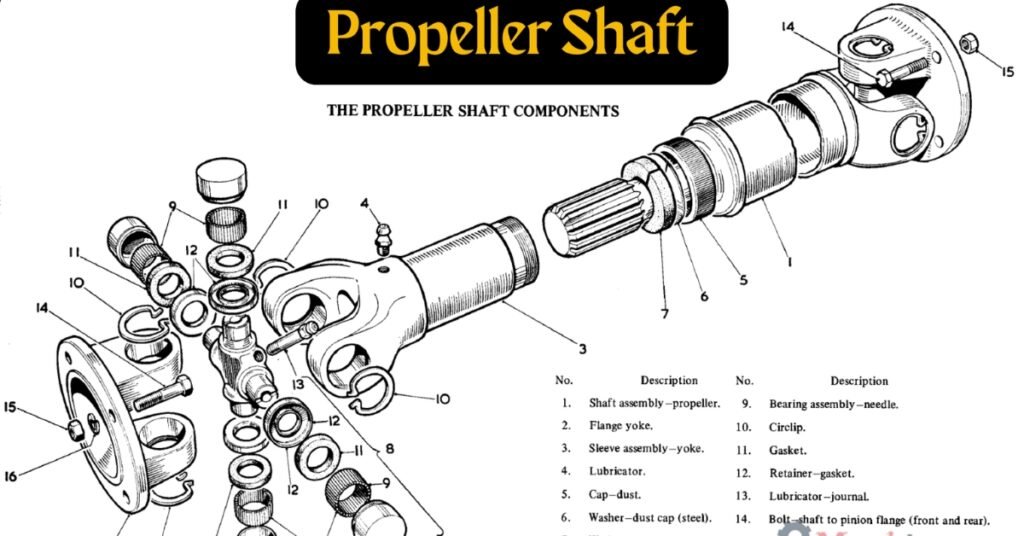
A propeller shaft which can also be referred to as prop shaft is a piece of mechanical hardware that conveys rotating power to the rear diff.
This shaft is turning at a very high rate and it has torque which ultimately rotates the wheels of the vehicle. Due to the distance that exists between the engine and back axle, the propeller shaft is a connecting shaft between them.
The propeller shaft is required to be robust enough to take the serious rotational forces and at the same time be lightweight enough to eliminate unnecessary vibration or inertia.
Propeller shafts are usually fitted in:
- Rear-wheel-drive vehicles
- Four-wheel-drive vehicles
- Trucks and heavy-duty trucks.
- Marine equipment and ships
- Motorcycles and locomotives.
Propeller shafts are well structured to ensure they balance and last long since they are operated in high stresses.
What is a Drive Shaft?
Another part is a drive shaft that is used to transfer power through the transmission or transfer case to the wheels.
To explain it simply, it transforms the rotational energy generated by the engine into torque which enables the wheels to move forward or backwards.
Although technically propeller shafts are a form of drive shaft, the term drive shaft is more general and may also be used to refer to various forms of power-carrying shafts in various vehicle designs.
There are almost no cars that do not have drive shafts since the force has to flow between the transmission and the wheels.
There are several varieties of drive shafts; they are:
- Solid drive shafts
- Two-piece drive shafts
- Front drive shafts
- CV axle shafts
These types have a particular use based on the design of the vehicles and the drive train.
Types of Drive Shafts
Solid Drive Shaft
Rear-wheel-drive cars have a solid drive shaft. It is unitary and this links the transmission with the rear differential.
This is a simple, powerful, and efficient type of a shaft in short wheelbase vehicles.
Two-Piece Drive Shaft
The distance between the transmission and rear axle in the larger vehicles like the truck or the bus is usually quite long.
In order to address this issue, the two-piece drive shaft applies to the engineers, and the drive shaft consists of a center support bearing. This construction lowers vibration and enhances the stability.
Front Drive Shaft
Four-wheel-drive cars tend to have a front drive shaft, which supplies power to the front diff. This enables the four-wheel drive to redistribute the power to the front wheels.
CV Axle Shaft
The front-wheel-drive and all-wheel-drive vehicles have a CV (Constant Velocity) axle shaft.
These shafts are used to have the transmission or differential attached to the wheels and to enable the smooth movement when the vehicle is being steered and also when there is a movement in the suspension. Data Significant Comparisons between Propeller Shaft and Drive Shaft.
Despite the similarity in the type of work they do, there are some significant distinctions between the two.
Vehicle application
Propeller shafts are primarily applied in a rear-wheel-drive and four-wheel-drive automobile with drive shafts present in a wide variety of vehicles.
Function within the system
Propeller shafts are used to couple the transmission to the rear differential and drive shafts may be used to couple different powertrain components.
Size and structure
Propeller shafts are longer as they are linked to components that are far apart unlike the drive shafts which are short.
Terminology usage
Drive shafts are all propeller shafts and propeller shafts are not all drive shafts.
These differences allow us to understand the flow of power in a car or motor vehicle through the drive train.
Primary Propeller Shaft components
There are various significant parts of a propeller shaft that enable it to operate in a smooth manner.
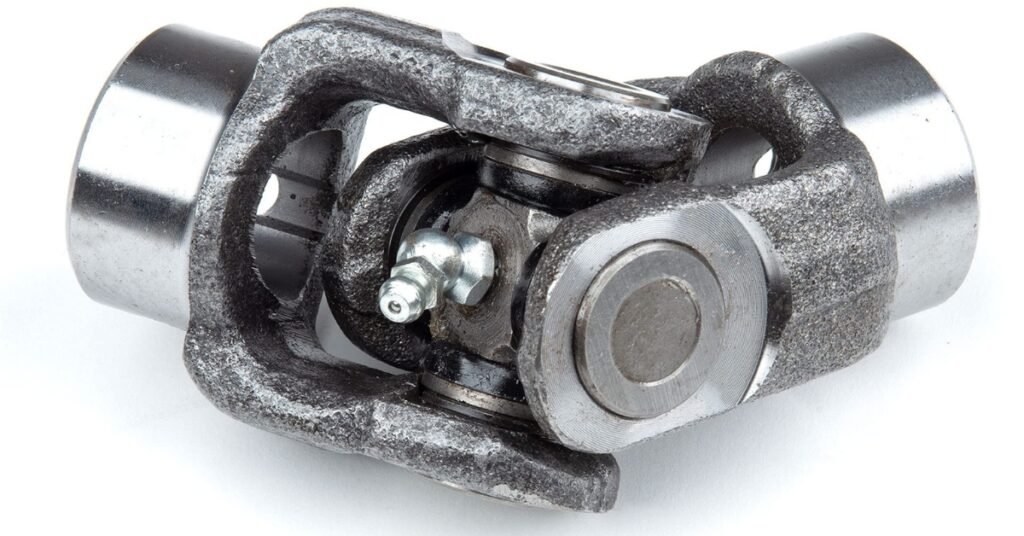
U-Joint (Universal Joint)
A U-joint is a device that is used to connect the rotating shafts and provide them to work at alternative angle. This is necessary since the transmission and rear axle are not always aligned in a perfect manner.
Tube
The propeller shaft consists of a tube that constitutes the body. It is commonly fabricated out of steel and offers power, but makes the shaft light.
Center Bearing
The shaft is held by the center bearing in automobiles with two-piece driveshaft. It eliminates vibration and stabilizes rotating shaft.
Midship Shaft
The midship shaft joins the various parts of the propeller shaft system and the lengthy setups of the drives.
End Yoke
The end yoke joins the shaft to other drives according to reduce vibration and noise.
Slip Yoke and Tube Yoke
These parts enable the driveshaft to slide a little as the suspension moves so that there is smooth transfer of power.
Flanges
The driveshaft is joined to other parts of the car including the transmission, transfer case or the differential via flanges.
Substances in Propeller Shafts
Propeller shafts are normally composed of hardened steel or alloy steel.
These materials provide:
- High torsional strength
- Fatigue and wear resistance.
- Strength when subjected to high loads.
A few more modern cars can utilize light materials such as aluminum or carbon fiber to enhance performance.
F&Q
How is the principal difference between a propeller shaft and a drive shaft?
A propeller shaft is a certain type of drive shaft, applied in the rear-wheel-drive vehicles; the term drive shaft is a general term of the power-converting shafts to the wheels.
Where do the propeller shafts in a car lie?
It is typically found below the car, which joins the transmission to the rear differentiation.
Do front-wheel drive cars have propeller shafts?
No. Front-wheel-drive cars normally employ CV axle shafts as opposed to propeller shafts.
What is the reason why the propeller shaft is tubular?
The tubular structure offers maximum strength but makes the shaft light and minimizes rotation inertia.
What will happen in case of a propeller shaft failure?
In case of failure in the propeller shaft, the power will not reach the wheels thus the vehicle will not move.
Disclaimer: This is an informative article aimed at education. Depending on the manufacturer, model, and the type of drive-train, the design of vehicles, their components and language can also differ.
Also Read:
How Many Companies Does Volkswagen Own, Full List of Volkswagen Group Brands
20 Basic Car Interior Parts Name with Functions and Pictures