Car Suspension Explained: Car suspension is yet another thing that you do not consider daily, but one that silently has a massive impact on the feel and performance of your car.
It connects your car with its wheels, absorbs road shocks and makes everything stable to enable you to drive your car comfortably and safely. The world would be a rough and unstable place to drive without it, and tiresome.
What is Suspension in a Car?
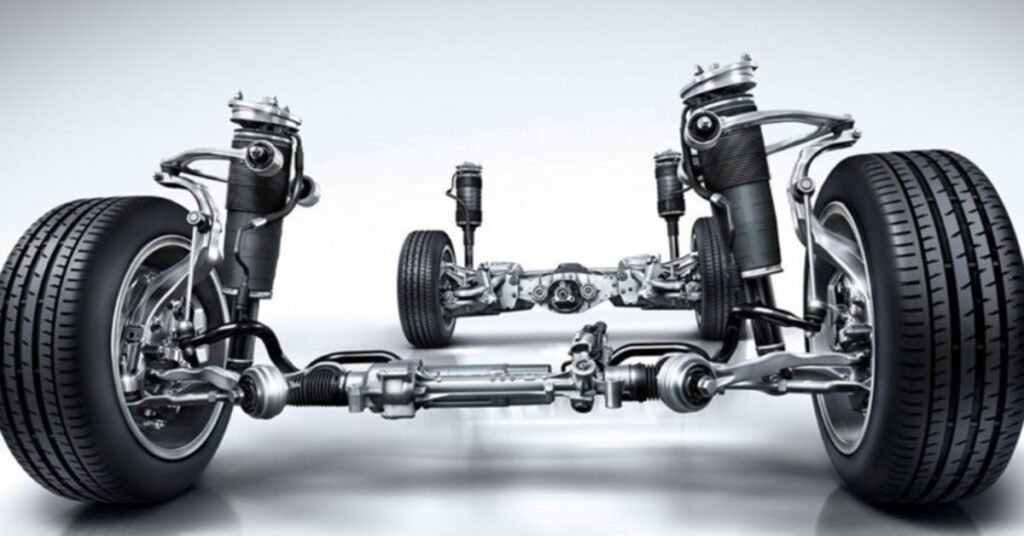
Imagine an experience of driving on a road that has a lot of bumps without anything to cushion the blow. Sounds uncomfortable, right? And that is what suspension avoids. To put it plainly, a car suspension system is a complex of components such as springs, shock absorbers and linkages that are combined and they all interact to absorb the shocks and maintain the balance of your car. It serves as a buffer between the road and your vehicle.
When the tyres go over bumps or potholes, the suspension absorbs the energy so that it does not make the energy directly feel in the cabin. Simultaneously, it provides that your tyres are always close to the road, and that is essential in preventing accidents.
The significance of Suspension
A suspension system should not just make the ride comfortable. It has a direct effect on your ability to control the car and your safety in general.
- The following are some of the reasons why it is important:
- It enhances grip of the road, keeping your tyres in touch with the road.
- It improves comfort through lessening vibrations and shocks.
- It assists in providing improved control during turning, braking, or acceleration.
- It minimises the wear and tear in other parts of the car.
Even a car with a good suspension would not be safe to drive without a proper suspension system.
Principal Components of an Auto Suspension System
The suspension of your car consists of a few components, all of which play a role. They both make it a smooth and controlled ride.
Springs
The springs distribute the weight of the car and absorb the impact of the road. They are also used to keep the proper height of your car.
Shock Absorbers (Dampers)
These regulate the movement of the springs. They do not allow the car to swing around, and instead, they absorb the energy and transform it into heat and steady the ride.
Struts
Struts contain a combination of functions. They are used to support the weight of the car, keep it straight, and are utilised together with shocks and springs.
Control Arms
They are used to attach the wheels to the frame of the car, and they permit good movement up and down of the car with everything in place.
Sway Bar (Stabiliser Bar)
This minimises body roll during turns in the car; thus, cornering is safer and more stable.
Ball Joints and Bushings
These mini parts are movable and flexible, and lessen noise and vibrations.
The Workings of a Car Suspension
The principle behind its working is the simple and intelligent suspension. It is concerned with taking up and distributing energy. As you bump your car, the wheels go up. This energy is absorbed by the springs, and the shock absorbers regulate the movement and ensure that the movement is not over-bounced.
This makes the car body stable when the wheels are always in motion. Without suspension, all the bumps would pass the entire force to the body of the car; the ride would have been very uncomfortable and unsafe.
Types of Car Suspension
Various cars have dissimilar suspension systems based on their use, comfort content and price.
MacPherson Suspension
Plain and cheap design that is used in the current automobiles.
Double Wishbone Suspension
Offers superior handling and stability, mostly in performance cars.
Multi-Link Suspension
A complicated system that provides high comfort and control but is more expensive.
Rigid Axle Suspension
Powerful and robust, normally applied to heavy or business vehicles.
Independent Suspension
Ride and stability: Eases all four wheels in individual directions.
Air Suspension
A sophisticated system that is able to electronically adjust ride height and comfort.
Indications That Your Suspension is Failing
All suspension problems are not unnoticeable. They should not be overlooked as this may cause more serious problems and insecure driving situations.
These are the symptoms that are commonly found:
- Your vehicle is not smooth, even on even-surfaced roads.
- When driving, the vehicle will pull towards either side.
- The discrepancy in tyres is evident over time.
- You can hear clunking or squeaking.
- As it brakes or takes a turn, the car leans or bends forward.
It is advisable to have your car checked immediately when you detect any of these signs.
What Will It Do in case of Suspension Failure?
It is not only uncomfortable to drive with a damaged suspension, but it may also be unsafe. Your vehicle might lose balance, braking distance might be longer, and steering may be unreliable. At worst, it might also cause loss of control, particularly at high speeds or on rough roads.
Maintenance and Replacement Cost

The maintenance of the suspension is conditional upon the road conditions and your driving habits. Bad roads have the ability to wear out parts.
Suspension repair averages may differ significantly, depending on the problem. Small repairs, such as alignment, are cheap, whereas major components, such as the springs or shock replacement, are costly.
Frequently Asked Questions (FAQs)
I do not know whether my suspension is bad or not.
In case your ride is uneasy, your car is pulling to one side, or you can see that your tyres are not worn evenly, then this means that your suspension is tired out.
Can you drive with a bad suspension?
No, it is not safe. It may interfere with steering, braking and your car’s handling in general.
How bad does bad suspension sound like?
Typical sounds are clunking, squeaking or rattling, particularly when passing over bumps.
What is the life span of a suspension system?
It will depend on the use, but the majority of the suspension component parts can be used over 50,000-100,000 kilometres.
Disclaimer: The article is informative and should not be used instead of professional advice on automotive matters. Assuming that there is something wrong with your suspension system, a certified mechanic would help in examining and fixing it adequately.
Also Read:
Wankel Rotary Engine Explained: Working, Parts, Advantages And Uses
1000+ Cute And Cool Car Names: Best Ideas for Funny, Stylish, and Unique Car Naming
Wankel Rotary Engine Explained: Working, Parts, Advantages, and Uses