Bank 1 vs Bank 2 Explained: Let’s keep this real. When you have ever seen such code as Bank 1 Sensor 2, you must have hesitated and thought, what is that all about? You’re not alone. The terms are technical but when you dissect them they are very easy to comprehend.
The entire situation is reduced to a single idea finding cylinder number 1. As soon as you have it where that is, you know. No difficult guessing, no misunderstanding.
Bank 1 vs Bank 2 Explained
| Topic | Details |
|---|---|
| Bank 1 | Side of engine with cylinder #1 |
| Bank 2 | Opposite side of Bank 1 |
| Cylinder Pattern | Odd cylinders = Bank 1, Even cylinders = Bank 2 |
| Sensor 1 | Upstream (before catalytic converter) |
| Sensor 2 | Downstream (after catalytic converter) |
| Best Method | Check vehicle service manual |
| Quick Tool | Use OBD2 scanner |
What Are Bank 1 and Bank 2?
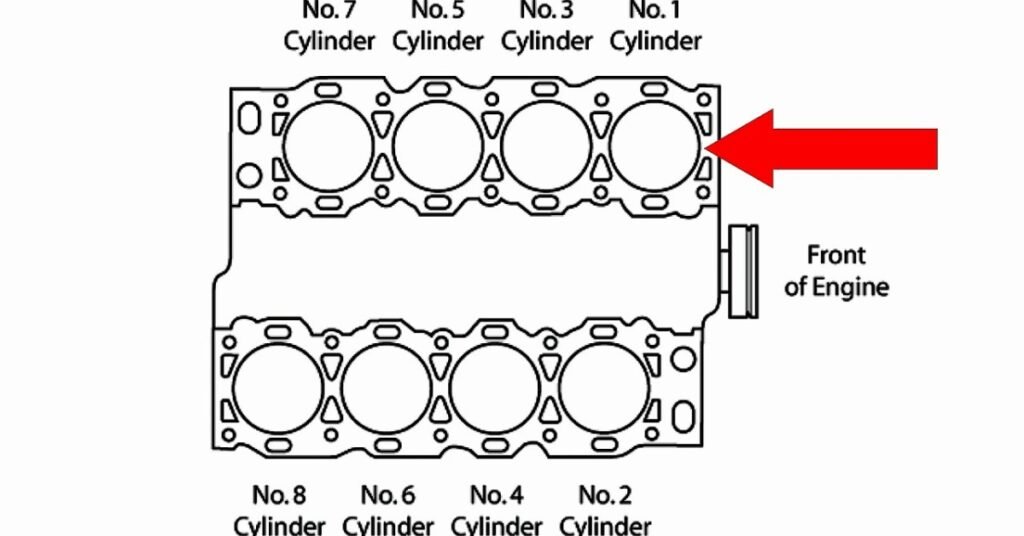
Your engine is separated into a number of sections known as banks. These are actually the engine sides.
- Bank 1 is the one that has cylinder number 1.
- Bank 2 is the opposite side
That’s the foundation. All other things are founded on this.
However this is where confusion arises among people. Bank 1 does not necessarily lie on the passenger side or the drivers side. It all depends on the manner in which the engine is designed by the manufacturer.
The reason this is more important than you think
Knowledge of the bank positions is not about theory. It has a direct impact on actual repair and diagnostics.
As an example, when your car displays the issue with one of the O2 sensors, and you change the incorrect one, you end up wasting time and money. This is why it is essential to know the right bank.
Here is the place that the identification of banks is employed:
- The diagnosis of engine error codes.
- Replacing oxygen (O2) sensors
- Experience in fuel injection systems.
- Corrections to exhaust-related issues.
Even a minor misunderstanding might result in a huge error.
How to Identify Bank 1
The most basic and certain one is always the same that is, look at your vehicle manual. It provides you with precise knowledge without any speculations.
Not in possession of the manual, you can, though, figure out how to do it in a few practical steps:
- Search engine for numbering on the engine.
- Search online schematics of your own particular vehicle.
- Adhere to the pattern of firing order.
- Determine the side to start with cylinder number 1.
When you have found the cylinder number 1, you know automatically the location of Bank 1.
Learning about Cylinder Numbering
It is often the case in most engines:
- Bank 1 has odd-numbered cylinders (1, 3, 5, 7) on it.
- Bank 2 contains even numbered cylinders (2, 4, 6, 8).
It is an assistance to a rule, rather than a rule per se. In any case, make a check-up on your specific vehicle.
Engine Types and Bank Setup
Banks are dependent on varying engine designs.
Inline Engines
These engines are straight line cylinders.
- Only one bank exists
- You will only see Bank 1
- There is no Bank 2
V-Type Engines
These engines are angled at two sides.
- One side is Bank 1
- The other side is Bank 2
- Common in V6 and V8 engines
Transverse Engines
They are installed in the car in a side fashion.
In many cases, Bank 1 is in front.
This does not always happen though.
And again, the best point of reference is cylinder #1.
Locations of O2 Sensors Simplified
Both bank number and sensor position have been used to label oxygen sensors.
This may not be very easy to understand at the onset of learning, but it is very logical.
Sensor Position Meaning
- Sensor 1 = upholder (pre catalytic converter)
- Sensor 2 = after catalytic converter.
Full Breakdown
- Bank 1 Sensor 1 Before catalytic converter on Bank 1
- Bank 1 Sensor 2 to after catalytic converter on Bank 1.
- Bank 2 Sensor 1 Before catalytic converter on Bank 2.
- Bank 2 Sensor 2! catalytic converter on Bank 2 after.
After getting to know about this pattern, error code reading will be much easier.
The Explanation of Upstream vs Downstream
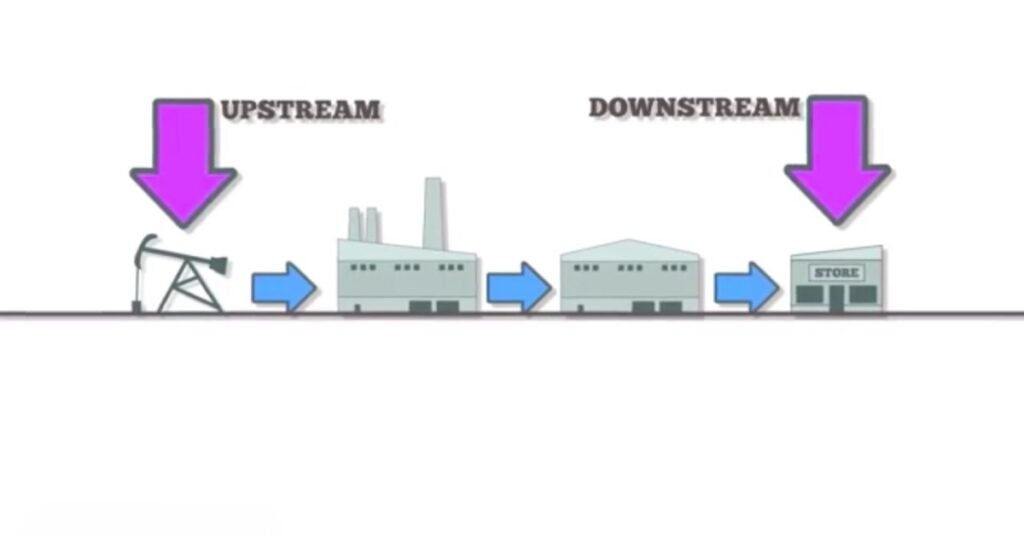
- Consider exhaust gases as water going through a pipe.
- Closer to the engine, prior to filtration Upstream.
- After the catalytic converter is called downstream.
Upstream sensors are used to monitor the burning of the engine.
Downstream monitors monitor the level of control of emissions.
Accuracy with OBD2 Scanner
An OBD2 scanner can also be very handy in determining the specific sensor at a faster and smarter rate.
Here’s how you can use it:
- Turn the ignition ON
- Plug in the OBD2 scanner
- Disconnect O2 sensors one in a time.
- Observations of the error codes changes.
- Profiling sensor location to match the code.
It is also a way to eliminate guesswork and save you the time of installing the wrong component.
Common Mistakes to Avoid
Most individuals commit minor but expensive errors when handling engine banks.
Here are a few to watch out for:
- Bank 1 is assumed to be on one side always.
- Interchange of upstream and downstream sensors.
- Ignoring the vehicle manual
- Replacement of parts which have not been properly diagnosed.
- These errors can be prevented, which will save time and money.
FAQs
Always aware of what side the Bank 1 is on?
No, it is the matter of engine arrangement and the design of the manufacturer.
Do all engines have Bank 2?
No, inline engines are single banked only.
What will be the result of substituting the incorrect O2 sensor?
You will be wasting money on a problem that will not go away.
It is important to question how many O2 sensors a car has.
The majority of the contemporary vehicles have a sensor count of 2-4.
Is it possible to drive with a defective O2 sensor?
Yes, and it can decrease the fuel consumption and raise emissions.
Disclaimer: The article is to be used as an educational purpose. Were you to refer to your official manual of your vehicle or refer to a certified one.
Also Read:
Lever in Physics: Types of Levers, Parts, Principle and Real Life Examples
50 Important Car Parts Names and Functions Explained for Beginners
Resonator Delete Explained: Meaning, Cost, Pros, Cons And Installation Guide