Air Conditioning System: When the weather is hot in summer, and one enters a cool room, this seems to be a relief. The air conditioning system is one of the most useful inventions that makes comfort possible in modern life. Whether it is at home or office, in cars or shopping malls, air conditioners are used to ensure that the environment indoors is comfortable.
Air conditioning does not only involve the cooling of air. It also regulates humidity, enhances the quality of air and makes the living and working environment in indoor spaces to be pleasant. The use of AC systems is significant in the modern world because it enhances comfort, health, and productivity.
What do you mean by an Air Conditioning System?
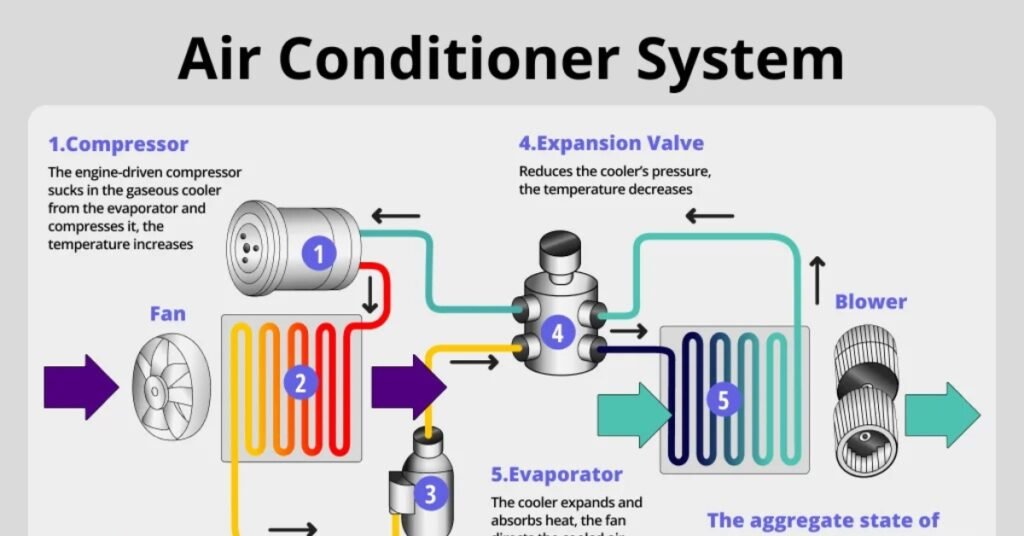
An air conditioning system (AC) is a machine, which extracts moisture and heat inside the building to achieve a comfortable temperature. It operates by exchanging the heat within a room to the outside world.
This system operates with special fluid known as refrigerant that moves throughout the system of the building in order to take in the heat contained in the indoor air and take it away out of the building. Consequently, the cool air is pumped within the building by use of fans and ducts.
The applications of air conditioners include:
- Homes and apartments are residential buildings.
- Business units such as offices and shopping malls.
- Automobiles and buses.
- Laboratories and industrial plants.
Principles of Air Conditioning System
The principle of an air conditioner worked is under heat transfer and refrigeration cycle. The system does not produce cool air, rather, it removes heat in indoor air.
The general procedure has four major steps:
- Heat Absorption
The warm indoor air is warmed by the refrigerant contained in the evaporator. - Compression
The compressor elevates the pressure and temperature of the refrigerant gas. - Heat Release
Hot refrigerant is sent through the coils of condenser and the heat is discharged to the outside. - Expansion
The refrigerant evaporates and condenses once more back to the evaporator to repeat the process.
This recycling process maintains the room as cool and comfortable.
Key Elements of an air conditioning system
An AC system has several elements that interact to sustain the cooling process.
Compressor
The compressor can easily be referred to as the heart of the air conditioner. It compresses low pressure refrigerant gas and transforms it into high pressure gas of increased temperature.
Condenser
Heat contained in the refrigerant is emitted to the external air through the condenser. It is commonly found in the outdoor section of the air conditioner.
Condenser Coil
The condenser coil is used to cool the high pressure gas and change it into a liquid refrigerant.
Thermostat
Thermostat regulates the temperature of the room. It detects the change of temperature and reminds the system that it is time to cool down or heat up.
Evaporator
The evaporator coil is able to absorb heat in indoor air. As refrigerant flows through it the liquid refrigerant is converted to gas and cools the room.
Air Handler and Blower
These elements circulate cool air all through the room or building by means of ducts and vents.
Fan
The fan assists in circulation of air in the system and dispersal of cool air within the room.
Air Filter
Air filters help to remove dust, pollen and other particles present in the air to enhance the quality of the indoor air.
Air Conditioning System
There are a number of significant functions that an air conditioner carries out other than cooling.
- Has a comfortable indoor temperature.
- Humidity is controlled within buildings.
- Enhances the air quality by blocking dust and pollutants.
- Improves domestic and employment comfort.
- Prevents overheating of electronic equipment.
There are two types of Air conditioning systems
There are various kinds of air conditioners that fit in the various spaces and cooling requirements.
Central Air Conditioning
The central AC systems are utilized in big buildings and cool the building by a system of pipes and vents that circulate the air all around the building.
Window Air Conditioner
A window AC is a small device that is placed on a window or a wall. It is mostly employed in cooling individual rooms.
Portable Air Conditioner
The portable AC units are movable floor units which have the ability to cool small areas. They expel hot air out using a hose.
Ductless Mini-Split Airconditioner.
Mini-split systems consist of an outdoor and an indoor unit that is linked with pipes. They best suit those homes who do not have duct systems.
Floor Mounted Air Conditioner.
These AC units are mounted close to the floor and would be mostly employed where the wall installation is not easily achieved.
Smart Air Conditioner
Smart AC systems are linked to Wi-Fi and can be managed with the help of mobile applications to make them more energy-efficient and convenient.
Geothermal Air Conditioner
The systems employ underground heat exchange to cool or heat the buildings effectively.
Dual-Fuel Air Conditioner
A heat pump is coupled with another heating system, e.g. a gas furnace, and this is known as a dual-fuel system.
Evaporative Air Conditioner.
These are also known as swamp coolers, and they cool air by evaporation of water.
Wall Mounted Air Conditioner
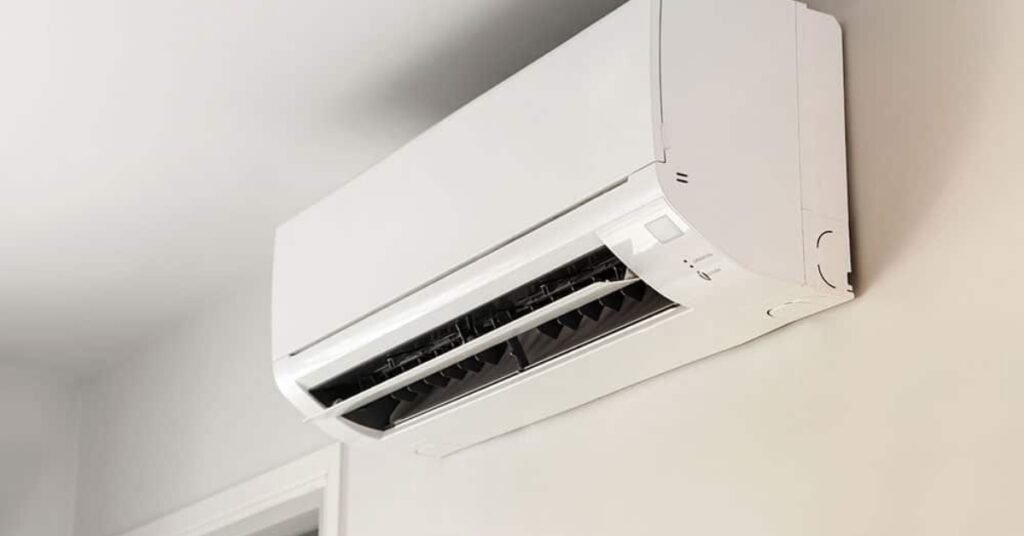
These types of units are permanently positioned on the wall and resemble the window AC units except that they are more stable.
Variable-Speed Air Conditioner.
Variable-speed AC systems maintain a variable cooling rate based on the need, and hence this makes them energy efficient.
The benefits of Air Conditioning System
Air conditioning has numerous comfort and health advantages.
- Enhances interior comfort on hot weather.
- Improves the quality of air by eliminating dust and allergens.
- Helps keep the humidity at a right level.
- Electronic protector against overheating.
- Enhances productivity and quality of sleep.
Cons of Air conditioning system
Air conditioning does not lack some disadvantages even though it has its advantages.
- Increased energy expenses and power usage.
- Overuse may have an drying effect, or be dehydrating.
- Fridges can be a source of pollution to the environment.
- The maintenance may become poor, leading to respiratory issues.
- AC filters should be replaced and cleaned periodically.
Disclaimer: This article is not intended to cause harm or do harm. Air conditioning systems can be subject to variability in technical specifications and performance based on the manufacture, the manner in which it is installed and climatic conditions. Any air conditioning system should not be installed or repaired without the advice of a professional in the HVAC field.
Also Read:
26 Types of Screws and Their Uses: Complete Guide for Home, DIY, and Construction Projects
TLC Meaning for Cars: What Tender Loving Care Means in Car Maintenance
26 Types of Screws and Their Uses: Complete Guide for Home, DIY, and Construction Projects