Shut your eyes a little and consider the last time you shut the key or flipped that start button and heard your automobile rattle into action. Such a sound, that old hum taking his place in a monotonous tread, is one of the most gratifying things about machines.
But have you ever ever wondered what is so happening under that hood? What are the muscles in action, what portions are turning and shooting and sealing all in a milliseconds time to get you going?
The majority of us engage in driving on a daily basis and we hardly consider the engine unless something bad goes on. Then all at once that eerie machinery in the hood becomes very personal.
What Is a Car Engine, Really?
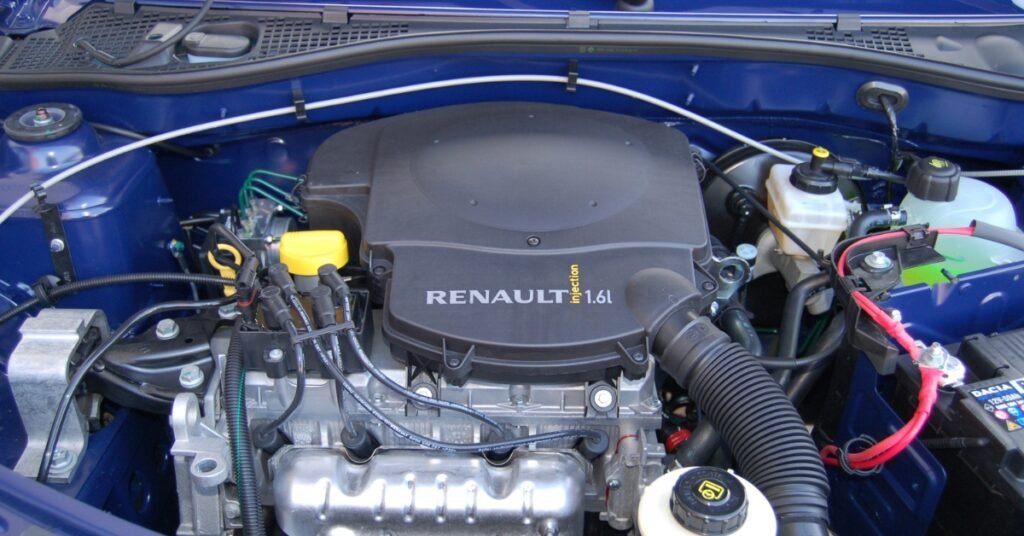
A car engine, at its core, is a machine, which consumes fuel, normally in the form of gasoline or diesel and converts it into mechanical energy, required to propel your car. The nature of engine used by the majority of contemporary vehicles is referred to as internal combustion engine (commonly referred to as ICE).
Internal is just the term used to indicate that the burning is within the engine and not outside the engine. As fuel is burned in the cylinders of the engine, it forms heat and growing gases.
What is the Way a Car Engine Works?
The easiest approach to an engine is to work through the four stroke combustion cycle the process that occurs inside each of the cylinders, reiterated thousands of times every minute. You should imagine it as a well-choreographed dance practiced in an extremely narrow room, at a very high rate.
All this starts at the intake stroke. The piston as it descends in the cylinder leaves a vacuum inside the cylinder as a syringe being drawn back. The vacuum pulls a combination of air and fuel in the open intake valve and into the cylinder. The piston continues descending until the cylinder is filled with this load of air-fuel.
Secondly is the compression stroke. The intake valve is closed and the cylinder is closed off. The piston then swings in the opposite way and returns back to its initial position which causes the air-fuel mixture to be squeezed into a much smaller area at the top of the cylinder. Such compression is imperative – a compressed mixture is burning much more powerfully than a loose mixture.
Then the time when the whole engine is made happens: the power stroke. A spark plug releases a small yet intense electrical spark, which triggers the mixture that is compressed. The combustion at the resulting result is a controlled explosion, pushing the piston back down with a powerful impact. Here is the real power of your engine. All the other strokes are there with the sole purpose to prepare this one moment and clean after it.
Lastly, the stage is swept by the exhaust stroke. The exhaust valve is opened and the piston moves backward upwards expelling the spent gases out of the cylinder and into the exhaust system. The instant the exhaust valve shuts and the intake valve re-opens once more, then the entire cycle repeats one more time: intake, compression, power, exhaust and, so on, until you switch off your engine.
These cycles occur in staggered manner in each of the multi-cylinder engine cylinders, meaning that at all times there is at least a cylinder producing power. That is what makes your engine run smoothly in a continuous output as opposed to a series of hard jerks.
What are the Major Car Engine Parts and What they do.
An average internal combustion engine includes about 200 separate parts. Both of them have their own particular job, and when they are all making music the machine will produce the dependable, mighty machine you use in your day-to-day life. This is a critical analysis of the most significant sections you need to be aware of.
The Engine Block – The Core of It The Rock
Supposing that the engine were a building, the engine block were its foundation and their exterior. The core of the whole engine is this heavy, substantial structure, which is commonly of cast iron or aluminum.
It holds the cylinders on which combustion occurs and the internal passages that transport the oil to be used in the lubrication process and the coolant to maintain the temperature. The camshaft, pistons and crankshaft are all contained or attached directly to the engine block. There can be no other functioning without a sound engine block.
Pistons -The Muscle that make it move.
The cylindrical items that move vertically within the cylinders are called pistons. They directly receive the force of the combustion as the mixture of air and the fuel burns, it is the bombarding gases that force the piston gradually down to a tremendous pressure.
Each piston moves up and down 2,500 times a minute at a speed per minute of only 1,250 RPM. They have to survive in extreme heat and pressure in the process, and that is why they are highly engineered using materials that can withstand such inhumane conditions. Pistons are also used to seal the compartment of combustion, manage heat loss, and the movement of the connecting rod besides the transfer of combustion force.
The Crankshaft-The Great Converter
It is here that among the most beautiful modifications which the engine has undergone takes place. The straight up-and-down motion of the pistons is then transformed by the crankshaft into the rotational motion which finally rotates your wheels.
The crankshaft is located at the base of the engine block and is attached to every piston by use of a connecting rod thus it rotates with every power stroke. Keep in mind that you should imagine the pedal crank on a bicycle: your leg is straight downwards, and the crank transforms it to the round movement of the wheels. The crankshaft is a component in the entire engine that is highly fined and engineered.
The Camshaft This is the Timekeeper of the Engine
The part that handles the timing of intake and exhaust valves is referred to as camshaft. It moves in time with the crankshaft with the help of a timing belt or chain, and makes sure that every valve opens and closes at the very appropriate time in every stroke of the engine.
In most modern cars the camshaft is located inside the cylinder head itself a design style called an overhead cam design which is more efficient in both. When the camshaft wears or fails, the engine’s timing falls apart, leading to misfires, loss of power, and rough running.
The Timing Belt The Invisible Conductor.
The most important component is the timing belt that maintains the crankshaft and camshaft in perfect coordination. It consists of reinforced rubber, heavy-duty, with teeth, which engage in meshing with the pulleys on both shafts, and in this manner all the valves open and close in complete alignment with the relative position of all the pistons. Should a timing belt relieve during engine operation the consequences can be disastrous pistons can strike open valves, which in turn can cause serious internal damage that can in most cases lead to a complete engine rebuild.
The schedule of replacing the timing belt that is provided by your manufacturer happens to be one of the most significant maintenance procedures that a car owner can perform.
Spark Plugs — The Spark of Life
Spark plugs which are small in size but of crucial importance are what ignites the compressed air-fuel mixture in each cylinder. The plugs have two electrodes which are separated by a tiny gap. When an electrical pulse of high voltage comes off the ignition coil, it leaps across that gap and forms a spark, firing the mixture at exactly the correct time of the combustion cycle.
Spark plugs have to survive temperatures that would cause many metals to melt and electrical pressures in the thousands of volts all in addition to firing every few hundred times per minute. Soiled or Greasy spark plugs lead to misfiring, ruddy idling, low fuel consumption, and slow acceleration.
The Upper Chamber of the Engine is the Cylinder Head
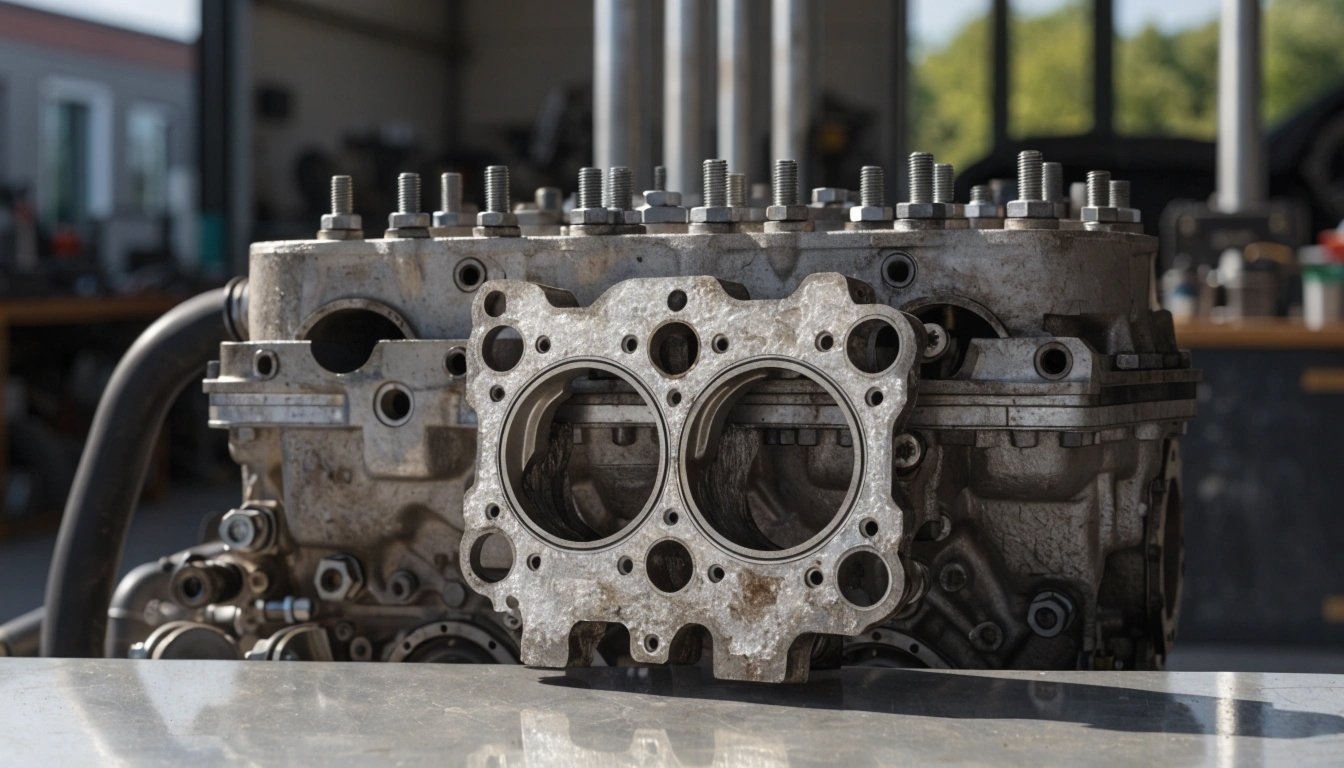
The cylinder head is the topmost section of each of the combustion chambers and it is closed off to the engine block by the head gasket. It is an intricate part which contains the intake and exhaust valves, the spark plugs, fuel injectors, and in most modern engines, the camshafts themselves.
Carefully molded passages are also present in the cylinder head to direct the incoming air and outgoing exhaust gases towards the most efficient use possible. Or a damaged or bent cylinder head usually due to over-heating may enable the coolant to enter the oil or the burning gases, both of which are precursors of dire things to the engine.
The Bridge of Push and Spin: The Connecting Rod
Connecting rod: This is the mechanical component that connects the piston and the crankshaft. The connecting rod pushes the crankshaft in a linear fashion when the piston is pushed down by the combustion and towards the crankshaft, this force assists in the rotation of the crankshaft.
It has to be solid to withstand explosive forces and yet be light so as to avoid the unnecessary mass to the moving assembly. On the top of it lies the connecting rod to the piston pivoting at a small pin referred to as the gudgeon pin or the wrist pin. A connecting rod that is on the verge of failure normally speaks of itself with a deep and heavy sound of knocking somewhere inside the engine – a sound that one cannot disregard.
Piston Rings with the Quiet Sealers
Coiled around the exterior of every piston are some thin metallic rings, usually two or three rings to the piston, which carry out a number of important functions at once. The compression rings are used to close the combustion chamber to ensure that the explosive force of ignition is compelled downward on the piston and not leaking out of the piston.
The oil control rings are used to control the quantity of lubricating oil that coats the walls of the cylinder and ensures that excess oil does not get into the combustion chamber. As the piston rings become worn, you will usually notice that there is blue or grey exhaust smoke, an excessive amount of oil is being used and that there is a tangible loss of engine power and compression.
Small yet Powerful Head Gasket
The head gasket is a thin layer of composite material that is between the engine block and the cylinder head and yet, it has gigantic responsibility. It should at the same time close the combustion chambers to hold explosive forces, close the coolant passages to stop leaks, and close the oil passages to ensure that the lubrication remains where it is supposed.
These systems cross-contaminate with a blown head gasket that may be caused by overheating or just by age. Oil containing coolant makes it milky and destroys its lubricating properties. Overheating is caused by gases of combustion in the coolant.
The Flywheel -Evening out the Pulses
The flywheel refers to a massive rotating disc that is stuck at the back of the crankshaft. Due to the combustion that occurs in a series of separate impulses instead of flowing continuously, the crankshaft has to accelerate and decelerate between successive shots anyway.
Rotational energy is stored in the mass of the flywheel each stroke of the power stroke and discharged between strokes to maintain the crankshaft moving at a steady speed. In cars which have a manual transmission the flywheel is also the mating surface to the clutch disc.
The Oil Pan and Lubrication System The Engine Lifeline
At the lowest point of the engine, there is the oil pan, which is the holder of the engine lubricating oil supply. This pan is then pumped with an oil pump and forced to the crankshaft bearings, camshaft bearings, cylinder walls and numerous other moving surfaces by a system of internal passages, with the protective film being a thin coating of oil. The metal parts within the engine would rub together and wear out in some few minutes without this constant flow of lubrication.
Engine Valves -The Gatekeepers
Each cylinder is supplied with at least two valves; one intake valve that opens to admit the air-fuel mixture A leaks in the intake manifold to the engine result in unmetered air entering the engine, interfering with the fuel mixture and causing rough operation, misfiring, and low performance.
The Exhaust Manifold -Making the Way.
The intake and the exhaust manifestations are equally important in that the former fills air in to the engine, whereas the latter transfers the spent gases out. It is directly connected to the exhaust valves of all the cylinders and receives the exhaust gases of each cylinder, which are of high pressure and temperature, and directs them through one pipe which connects to the catalytic converter and then the exhaust tip. The vast majority of exhaust manifolds consist of cast iron or stainless steel to be able to withstand the high temperatures.
The Cylinder Liner -Guarding the Bore
Within every cylinder bore a cylinder liner refers to a thin cylindrical sleeve that represents the actual piston ring sliding surface. As the outer structure is made up of engine block, the inner one is made up of the liner, which gives the accurate, smooth inside wall upon which the piston slides.
After some time the piston rings wear slowly against the liner but this wear is highly minimized by the thin film of oil that covers the walls throughout the operation.
The Crankcase -housing Crankshaft
The lower part of the engine block which encloses and protects the crankshaft is known as the crankcase. The crankcase is a part that is attached to the block casting as opposed to being separate in case of most modern engines. The oil pan forms the base of the crankcase which provides an enclosed space filled with the engine oil, and keeps the rotating crankshaft block clean and intact.
The Engine Distributor – The Spark Director
In older cars the distributor was the brain of the ignition system. Its spinning rotor would divert the high-voltage pulse of the ignition coil to every spark plug in firing sequence, at the most appropriate time.
Although in the majority of modern engines computerized ignition systems and separate coil packs have replaced the mechanical distributor, it still forms a major part of automotive history and is still present in many older and classic vehicles.
Camshaft Pulley and Timing Belt Drive Pulley -The Timing Team
The timing belt drive and the camshaft pulley are components of the timing system of the engine. The timing belt drive pulley attaching on the crankshaft moves the timing belt and determines its speed. The same belt drives the camshaft pulley which is mounted on the camshaft.
When combined, they guarantee the perfect synchronizing rotation of both the crankshaft and the camshaft an interdependence that is so significant that any slight discrepancy in the timing can lead to the appearance of apparent performance faults or severe engine sludge.
The Water Pump -Making Things Cool
The cooling system of the engine consists of water pump. It uses a continuous loop of coolant under belt tire, which pumps water and antifreeze into the engine block, cylinder head and radiator. As the coolant moves through the hot engine it picks up heat. It then passes on to the radiator where the heat is emitted to the air surrounding the engine and back to the engine cooled down.
The Oil Filter -The kidneys of the engine
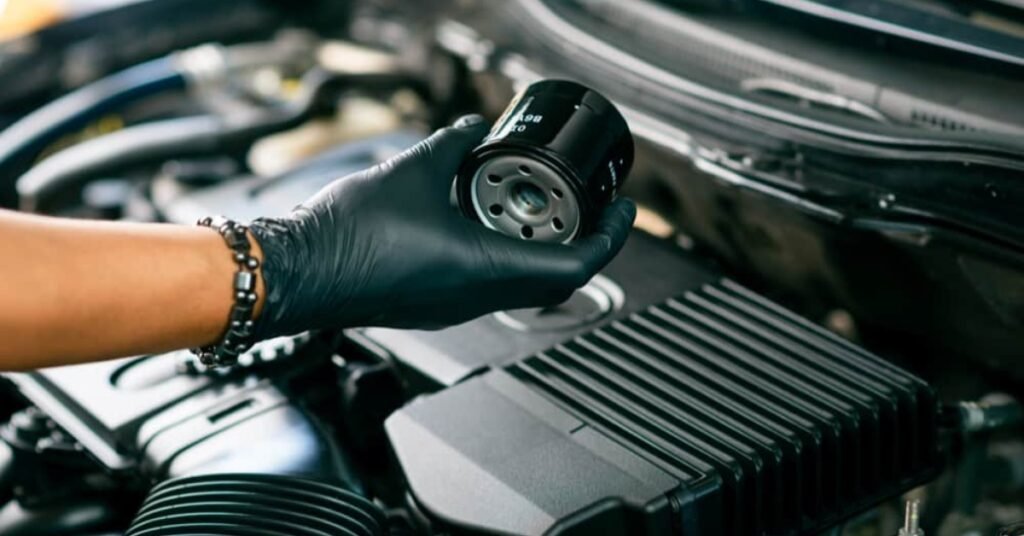
The oil filter performs the same task as the kidneys do to blood, that is, it constantly filters the fluid that keeps the engine alive. When oil circulates in the engine, it collects minute particle of metal, dirt and combustion products. These contaminants are then trapped by the oil filter before they are recirculated into the engine and lead to abrasive wear on the precision surfaces.
The Throttle Body- Direct connection of the Right Foot
Throttle body is the air gateway of the engine in other words the throttle body responds directly to the input of the driver. When you press on the accelerator pedal, you have been increasing the throttle body butterfly valve, increasing the amount of air entering the engine. The more air, the more will be burnt and this translates to more power. In the modern day, this is done electronically, the throttle body is sent a signal by the engine control unit depending on how far you have pressed the throttle pedal.
Car Engine Parts: Fuel Injectors Precision Fuel Delivery
Gone are the days when one used to have a fuel mixed with air by a mere carburetor. Fuel injectors are the vital components of modern engines, they are nozzles that discharge a very controlled number of fuel through a certain spraying device at the required moment either into an intake port or into the combustion chamber. The engine control unit decides how much and when to inject each injection according to the data of dozens of sensors.
The Air Intake System and Air filter- The lungs of the engine
Any air entering the combustion chamber must go through the air intake system first composed of ducts tubes and passages that direct the outside air to the engine. The first place in this path is the air filter that captures dust, pollen, insects and other aerial particles before they can enter into the engine and inflict abrasive damages on the cylinders, pistons and the valves.
The Fuel Delivery System -Getting Fuel Where It Goes
The entire chain of components that are involved in the transfer of fuel between tank and the combustion chambers is called the fuel delivery system. It comprises of the fuel tank, fuel pump, which pressurizes the system, the fuel lines, which introduce it to the system, the fuel pressure regulator, and finally the fuel injectors, which introduce it to the point of demand.
The system should be able to be steady under any driving conditions be it idling or full throttle the system should be such that it maintains a constant pressure throughout the driving conditions so that the engine obtains the correct amount of fuel at all times.
Turbochargers and Superchargers – When More Power Is the Object
Both superchargers and turbochargers are forced induction systems, i.e. they are systems that force more air into the engine than would otherwise be forced in naturally and they enable the burning of more fuel and production of more power.
The engine exhausts drive a turbocharger, which takes advantage of the very energy he would have dissipated in rotating a turbine, which, in turn, would compress air coming in. Supercharger with a belt attached to the crankshaft operates the supercharger in a mechanical way giving an immediate boost without the slight delay otherwise referred to as turbo lag by turbos.
The Valvetrain -Orchestrating Every Breath
All the components are collectively called the valvetrain and they are what is involved in the opening and closing of the engine valves. This may consist of the lobes of the camshaft, the rocker arms, pushrods, lifters, the springs of the valves, and retainers depending on the design of the engine.
During an overhead valve engine, the camshaft causes the lifters to strike the pushrods and subsequently this presses the rocker arms and forces the valves open. A camshaft in an overhead cam engine has a more direct effect on the valves. No matter the design, the valvetrain must perform on an extremely high level of accuracy at high velocities and is powered to ensure the breathing of each cylinder performs in flawless harmony with the combustion cycle.
Rocker Arms and Pushrods -The Motion Translators
Rocker arms are lever like parts which swing on a shaft or stud, where the push is exerted on the valve stem by the camshaft (on an OHV engine, by a pushrod) and the other end exerts the downward force on the valve stem to open the valve.
They completely turn the movement of the pushrod downward into a downward push upon the valve. The pushrods are the long, thin metal rods which connect the lifters which track the lobes of the cam to the rocker arms in pushrod engines. Each of them takes part in the mechanical chain transforming the movement of a camshaft to the movement of the valves in an accurate manner.
The Cylinder Head cover and Rubber Grommets- Protection-Details
The cylinder head cover, commonly known as the valve cover, is placed over the top of the cylinder head, covering all the internal valvetrain parts within it against dirt and debris as well as mechanical damage. Components of the crankcase ventilation system are also placed in the contemporary engines.
Rubber grommets are tiny yet significant sealing and shock absorbing materials that are employed all over the engine. They are also installed around the bolts that run through the valve cover to prevent leaks of oil and dampen vibration and also guard wiring and hoses that run through holes in the metal panels against damage caused by sharp edges and continual movement.
Car Engine Parts: The Starter Motor The Engine Clock
Something must get the engine started to run on its own power before it can run. The starter motor is that, a small, but powerful, electric motor which connects with the ring-gear of the flywheel when you turn on the ignition key or press the start button.
It cranks the engine at a speed considered fast enough to allow the combustion process to occur after which the starter is disengaged and the engine runs independently. A faulty starter motor is normally indicated by clicking sound when attempting to start the automobile, slowness in the rate of cranking or even total silence when you flip the key.
Frequently Asked Questions
Q: How many parts does a car engine have?
A typical internal combustion engine contains approximately 200 individual parts that must all work together reliably. By comparison, an electric vehicle’s drivetrain has around 20 moving parts which is one of the reasons electric vehicles require less maintenance. However, the engineering refinement of the internal combustion engine over more than a century has made it remarkably reliable despite its complexity.
Q: What is the most important part of a car engine?
Every part of the engine is important in its own way the failure of even a small component like a timing belt or head gasket can stop the engine entirely or cause catastrophic damage. That said, the engine block is often considered the foundational component, as all other parts are either housed within it or attached to it. Without a sound engine block, nothing else functions.
Q: What causes an engine to overheat?
Engine overheating is most commonly caused by a failure somewhere in the cooling system. This can include a leaking head gasket that allows combustion gases into the coolant, a failing water pump that stops circulating coolant, a clogged radiator that can no longer dissipate heat efficiently, a stuck thermostat, or simply low coolant levels due to a leak. Overheating should be treated as an emergency continuing to drive an overheating engine can cause warped cylinder heads, a blown head gasket, or even a cracked engine block.
Q: What does white smoke from the exhaust mean?
White or steam-like smoke from the exhaust is usually a sign that coolant is entering the combustion chamber and being burned along with the fuel. This typically points to a blown head gasket or a cracked cylinder head. It is a serious warning sign that requires immediate attention. Coolant in the cylinders can also hydrolock the engine since liquids cannot be compressed causing sudden and severe mechanical damage.
Q: How often should I change my engine oil?
The answer depends on your specific vehicle and the type of oil you use. Modern vehicles running full synthetic oil often go 7,500 to 10,000 miles or more between changes, while older vehicles or those using conventional oil typically need changes every 3,000 to 5,000 miles. Always refer to your vehicle owner’s manual for the manufacturer’s recommended interval, as it is calibrated specifically for your engine’s requirements.
Q: What is the difference between a turbocharger and a supercharger?
Both devices compress air entering the engine to increase power output, but they draw their driving energy from different sources. A turbocharger is powered by the engine’s own exhaust gases — it recaptures energy that would otherwise be wasted. A supercharger is driven by a belt connected directly to the crankshaft, drawing power from the engine itself. Turbochargers are generally more fuel-efficient, while superchargers offer more immediate power response with no lag.
Q: What is engine knocking and why is it bad?
Engine knocking sometimes described as a pinging, rattling, or rhythmic tapping sound from the engine can have several causes. Detonation knocking happens when the air-fuel mixture ignites prematurely or unevenly in the combustion chamber, often due to using fuel with too low an octane rating. Rod knock is a deeper, more serious sound caused by worn connecting rod bearings, which allow the rods to knock against the crankshaft. Both forms of knocking should be investigated promptly, as they can quickly lead to significant internal engine damage.
Q: Can I drive with a misfiring engine?
While a single, occasional misfire might not strand you immediately, driving with a persistent engine misfire is not advisable. Misfires mean that one or more cylinders are not contributing to the engine’s power output, increasing strain on the other cylinders. More importantly, unburned fuel entering the exhaust system can damage the catalytic converter an expensive component.
Disclaimer: The information presented in this article is intended solely for general educational and informational purposes. While every effort has been made to ensure accuracy and clarity, the content has been simplified for accessibility and may not reflect the precise engineering specifications, design variations, or technical nuances of every vehicle make, model, or engine type.